


Are You Overpaying on Property Taxes?
If you’re searching for a property tax appeal lawyer near me, you’re likely facing an unfair property tax assessment and looking for expert legal help to challenge it. Here’s what you need to know:
What a Property Tax Appeal Lawyer Can Do for You:
- Challenge Over-Assessments – Review your property’s assessed value and identify errors or inflated valuations
- Gather Evidence – Compile comparable sales data, independent appraisals, and documentation to support your case
- Steer Complex Procedures – Handle strict deadlines, filing requirements, and hearings before local review boards
- Negotiate with Tax Authorities – Represent you in settlement discussions and formal appeal proceedings
- Maximize Your Savings – Secure multi-year tax reductions and potentially obtain refunds for prior over-assessments
When to Hire a Property Tax Appeal Lawyer:
- Your property tax bill increased significantly without explanation
- You purchased your property for less than its assessed value
- Your property has damage or depreciation not reflected in the assessment
- You were wrongly denied an exemption (homestead, senior, veteran, agricultural)
- Your initial appeal was denied and you need representation for higher-level proceedings
Outcomes depend on the applicable rules and facts. Review the available options for the particular matter; another taxpayer’s result does not predict yours.
The connection between your property’s assessed value and your tax bill is direct—if your property is valued too high by the local assessor, you’re paying more in taxes than you should. Many property owners simply pay whatever appears on their tax bill without realizing that assessed values are adjusted downward much more often than people realize.
However, the property tax appeal process can be complex and confusing. Local procedures vary by county and state, with strict deadlines and technical filing requirements that are usually strictly enforced against the taxpayer. One misstep can mean losing your right to appeal for that year.
Verify current credentials and relevant experience, and obtain written engagement terms. Do not assume a particular firm history, client count, office location or probability of success.
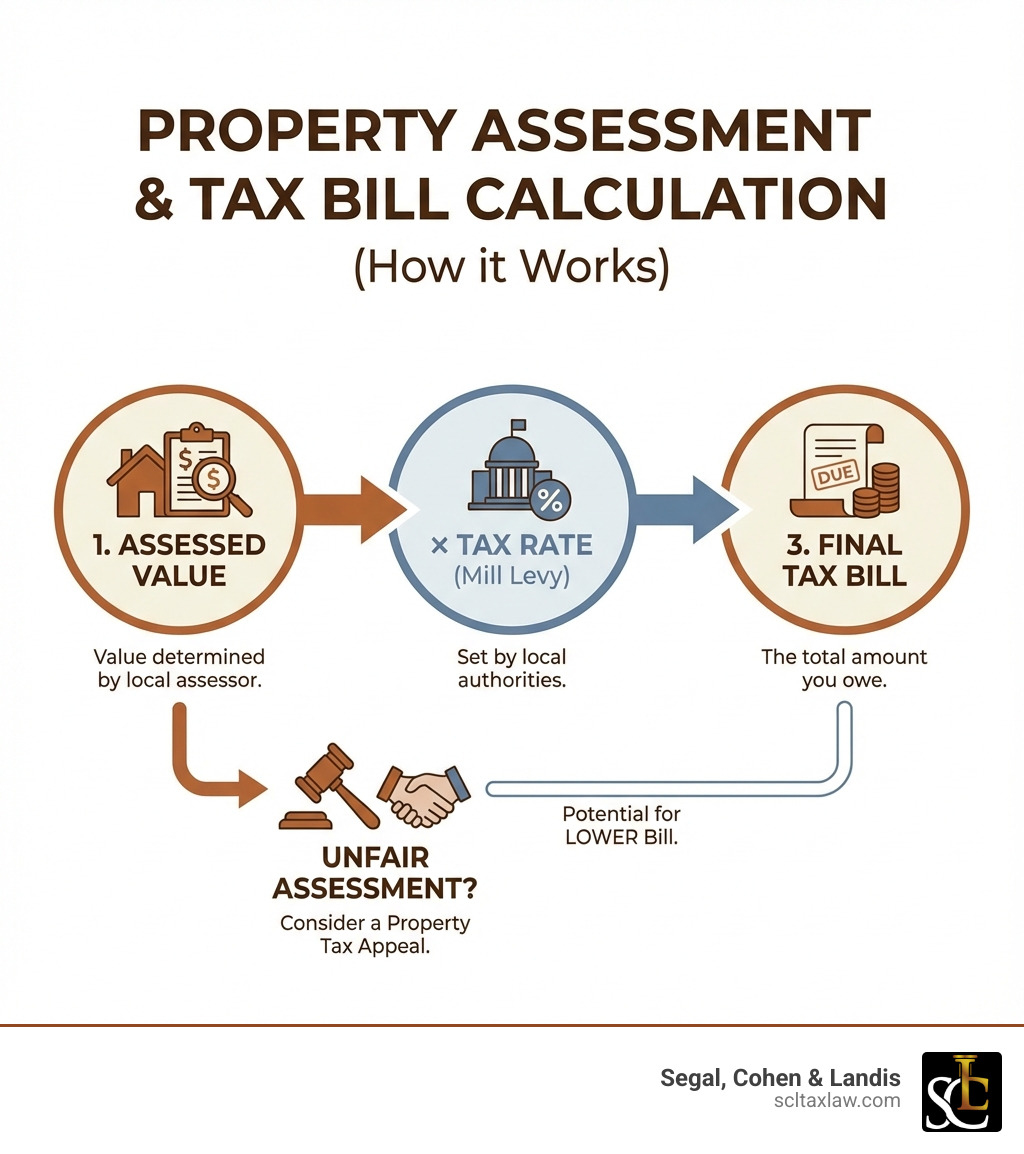
Simple guide to property tax appeal lawyer near me:
Understanding Property Tax Appeals and When You Need One
Identify the work needed for your tax matter and confirm the proposed representative’s qualifications, jurisdictional authority and scope of engagement. Do not assume a particular office location, service commitment or result.
Property tax assessments apply to a wide range of property types. Whether you own a cozy residential home in Los Angeles, a busy commercial building in Chicago, an industrial facility in Houston, or agricultural land in Tallahassee, the principles of assessment and appeal remain relevant. Each type of property comes with its own unique valuation challenges and assessment criteria. For instance, commercial properties often involve complex factors like income generation and operating expenses, while residential properties might focus more on comparable sales.
Identify the work needed for your tax matter and confirm the proposed representative’s qualifications, jurisdictional authority and scope of engagement. Do not assume a particular office location, service commitment or result. Related resources: More info about our tax services.
Common Grounds for a Property Tax Appeal
Why might your property’s assessment be inaccurate? There are several common reasons that form the basis for a successful property tax appeal:
- Over-assessment: This is the most frequent reason. Assessors sometimes make subjective decisions about market value, cost, depreciation, and capitalization rates. These misjudgments can result in excessive and unlawful taxes. This can happen whether you’re in Miami or Sacramento.
- Factual Errors on Property Record: Simple mistakes on your property record can lead to inflated assessments. This could include incorrect square footage, a wrong number of bedrooms, or features listed that your property doesn’t possess.
- Misclassification: Your property might be incorrectly classified, leading to a higher tax burden. For example, a property used for a “bona fide agricultural purpose” might be eligible for an agricultural tax exemption in Florida, but could be misclassified for general residential or commercial use.
- Lack of Uniformity with Similar Properties (Comps): If properties similar to yours in your neighborhood (comparable properties or “comps”) are assessed at a lower value, it’s a strong indicator that your property may be over-assessed. This principle of uniformity is key to fair taxation in cities from Dallas to Seattle.
- Identify the work needed for your tax matter and confirm the proposed representative’s qualifications, jurisdictional authority and scope of engagement. Do not assume a particular office location, service commitment or result.
Why You Might Need to Appeal Your Property Taxes
Beyond the specific grounds for appeal, several situations often trigger the need to challenge your property taxes:
- Sudden Tax Increase: If your property tax bill jumps significantly without a clear explanation or corresponding increase in property value, it’s a red flag. Local assessors might have revalued your property based on incorrect data or an overly optimistic market analysis.
- Recent Property Purchase Below Assessed Value: If you recently purchased your property for less than its current assessed value, this is compelling evidence that the assessment is too high. The purchase price itself can serve as a strong market indicator.
- Property Damage or Deterioration: Has your property suffered damage from a natural disaster, or has it simply deteriorated over time? If these factors aren’t reflected in your assessment, your property’s value may be overstated.
- Businesses Routinely Appeal Assessments as a Tax Strategy: As the New York Times noted, “Businesses, of course, appeal property assessments as routinely as coaches work the refs.” This isn’t just a tactic for large corporations; homeowners can also use property tax appeals as a smart tax strategy to reduce their annual financial burden. For commercial property owners in places like Boston or San Francisco, reducing property taxes can significantly impact the bottom line and free up capital for growth and investment.
Navigating the Property Tax Appeal Process Step-by-Step
The property tax appeal process can feel like a labyrinth, but with the right guidance, it’s a navigable path to potential savings. While specific steps and timelines vary by state and even county, a general framework applies across jurisdictions from Los Angeles to New York. The journey typically begins when you receive your Notice of Proposed Property Taxes or assessment notice, which details your property’s assessed value and the taxes due. This notice is your cue to act, as strict deadlines for filing an appeal usually follow. Missing these deadlines can mean losing your opportunity to challenge the assessment for that tax year.

Gathering Your Evidence and Documentation
A successful property tax appeal hinges on robust, well-organized evidence that supports your claim of over-assessment. Without solid documentation, your appeal is unlikely to succeed. Here’s a list of essential documents and information you’ll need:
- Property Record Card: This document, usually available from your local assessor’s office, details the assessor’s data about your property (size, features, construction, etc.). Review it carefully for any factual errors.
- Recent Independent Appraisals: An appraisal conducted by a certified, independent appraiser can provide a credible, unbiased valuation of your property. This is often the strongest piece of evidence you can present.
- Photos of Property Condition: If your appeal is based on damage, deterioration, or unique features that negatively impact value, photographic evidence is crucial. This is especially important if your property’s condition differs significantly from comparable properties.
- Sales Data of Comparable Properties: Research recent sales of similar properties in your immediate area. Look for properties that are alike in size, age, condition, and features. This “comps” data helps demonstrate what buyers are actually paying for properties like yours.
- Repair Estimates: If your property requires significant repairs due to damage or deferred maintenance, obtain professional estimates for the cost of these repairs. This can show a reduction in your property’s market value.
- Income Statements for Commercial Properties: For commercial or income-generating properties, financial statements, including rental income, operating expenses, and vacancy rates, are vital. These documents help establish the property’s income-generating potential, which is a key factor in its valuation.
We emphasize the importance of thorough valuation analyses, as assessment jurisdictions often settle cases rather than go to trial when faced with carefully prepared evidence.
What to Expect During the Appeal and If It’s Denied
The property tax appeal process typically involves several stages, starting at the local level:
- Initial Review by Assessor’s Office: Often, the first step is an informal review or discussion with the assessor’s office. This can sometimes resolve the issue without needing a formal appeal.
- Hearing Before a Local Review Board or Administrative Panel: If the informal review doesn’t yield results, you’ll typically file a formal petition and present your case before a local board. This might be a Value Adjustment Board (VAB) in Florida, a Board of Review in Michigan, or an Appraisal Review Board (ARB) in Texas. During this hearing, you’ll present your evidence, and the assessor will present theirs.
- Further Appeal Options: If your appeal is denied at the local board level, you usually have options to escalate your case. These can include:
- Administrative Appeals: Moving to a higher state-level administrative body.
- Local Courts: Filing a lawsuit in a local circuit court. In Florida, for example, if you disagree with the VAB’s decision, you can file a lawsuit in circuit court, which often requires legal representation.
- State Tax Tribunals: Some states, like Michigan, have specialized tax tribunals (e.g., the Michigan Tax Tribunal) that handle property tax disputes.
It’s crucial to remember that each level of appeal has its own strict deadlines and procedural requirements. This is where the expertise of a property tax appeal lawyer near me becomes invaluable. They can guide you through these complex stages, ensuring all documentation is correctly filed and deadlines are met, significantly improving your chances of success.
How to Find the Best “Property Tax Appeal Lawyer Near Me”
Finding the right property tax appeal lawyer near me is a critical step towards successfully challenging your assessment. It’s not just about finding any lawyer; it’s about finding one with the specific expertise and local knowledge to steer your unique situation.

The importance of local expertise cannot be overstated. Property tax laws, assessment methods, and appeal procedures can vary significantly from one county or state to another. A lawyer familiar with the nuances of the Los Angeles County assessor’s office, for example, will have a different approach than one specializing in Cook County, Illinois. This local insight, coupled with an understanding of specific real estate market conditions in your area (whether it’s the booming market of Austin or the historic properties of Boston), can be a game-changer.
Outcomes depend on the applicable rules and facts. Review the available options for the particular matter; another taxpayer’s result does not predict yours. Related resources: Find pro bono and low-cost legal help.
Key Factors for Choosing Your Property Tax Appeal Lawyer
When selecting a property tax appeal lawyer near me, consider these key factors to ensure you find the best fit for your needs:
- Identify the work needed for your tax matter and confirm the proposed representative’s qualifications, jurisdictional authority and scope of engagement. Do not assume a particular office location, service commitment or result.
- Verify current credentials and relevant experience, and obtain written engagement terms. Do not assume a particular firm history, client count, office location or probability of success.
- Identify the work needed for your tax matter and confirm the proposed representative’s qualifications, jurisdictional authority and scope of engagement. Do not assume a particular office location, service commitment or result.
- Client Testimonials and Peer Reviews: What do other clients say about their experience? Positive testimonials and peer recognition from other legal professionals are strong indicators of a lawyer’s reputation and effectiveness.
- Outcomes depend on the applicable rules and facts. Review the available options for the particular matter; another taxpayer’s result does not predict yours. Related resources: Learn about our LA tax attorneys.
Questions to Ask a Potential Property Tax Appeal Lawyer Near Me
Before committing to a lawyer, schedule a consultation and ask these crucial questions:
- What is your experience with properties like mine in this area? This helps gauge their local expertise and relevance to your specific property.
- Outcomes depend on the applicable rules and facts. Review the available options for the particular matter; another taxpayer’s result does not predict yours.
- How is your fee structured for property tax appeals? Understanding their payment model upfront is essential.
- Who will be handling my case directly, and how often will I receive updates? You want to know who your primary contact will be and what level of engagement to expect.
- What is your strategy for my appeal, and what challenges do you foresee? A good lawyer will outline a clear plan and discuss potential problems.
The Value Proposition: Costs vs. Benefits of Professional Help
Engaging a professional for your property tax appeal is an investment that often yields significant returns. While you might consider handling the appeal yourself, the complexities of property tax law and the local assessment processes make expert legal representation invaluable.
Outcomes depend on the applicable rules and facts. Review the available options for the particular matter; another taxpayer’s result does not predict yours.
Outcomes depend on the applicable rules and facts. Review the available options for the particular matter; another taxpayer’s result does not predict yours. Related resources: More info about our tax attorneys.
Typical Fee Structures for Property Tax Attorneys
Understanding how property tax attorneys charge for their services is important. While we don’t discuss specific pricing, common fee structures include:
- Contingency Fees: This is a popular model where the attorney’s fee is a percentage of the tax savings achieved. If there are no savings, there’s typically no fee. This aligns the attorney’s success directly with yours.
- Flat Fees: A fixed fee for specific services, such as preparing and filing an initial appeal.
- Hourly Rates: Attorneys charge based on the time spent working on your case.
- “No Savings, No Fee” Models: Similar to contingency fees, this model guarantees that you only pay if the attorney secures a reduction in your property taxes.
Verify current credentials and relevant experience, and obtain written engagement terms. Do not assume a particular firm history, client count, office location or probability of success.
The Potential Benefits of Hiring an Expert
The benefits of hiring an expert property tax appeal lawyer near me extend far beyond just navigating paperwork:
- Review the relevant facts, documents, filing requirements, and deadlines before choosing a response. Confirm professional qualifications and the agreed scope of assistance; outcomes depend on the applicable law and circumstances.
- Time Savings and Reduced Stress: The appeal process can be time-consuming and emotionally draining. An attorney handles all the complexities, allowing you to focus on your life or business.
- Securing a Multi-Year Value Freeze: In some jurisdictions, a successful appeal can result in a “value freeze” for a certain number of years, preventing your assessment from increasing during that period, even if market values rise.
- Refund eligibility and claim deadlines depend on the jurisdiction, assessment, payment, and applicable procedure. Review the actual tax years and local rules; do not assume a universal three-year refund period.
Frequently Asked Questions about Property Tax Appeals
What is the difference between a property tax appeal and an IRS appeal?
This is a common and important distinction.
- Property Tax Appeal: This occurs at the local or state level. It involves challenging the assessed value of your real estate property (land and buildings) as determined by your county or municipal tax assessor. The goal is to reduce your property’s valuation, which in turn lowers your property tax bill. These appeals are handled by local review boards, administrative tribunals, or state courts.
- IRS Appeal: This occurs at the federal level. It involves disputing a decision made by the Internal Revenue Service (IRS) regarding federal income tax, payroll tax, estate tax, or other federal taxes. The IRS Office of Appeals provides an opportunity to resolve tax disputes without going to federal court. If an agreement cannot be reached, the case might proceed to the U.S. Tax Court. In 2023 alone, the IRS processed over 271 million tax returns and collected approximately $4.7 trillion, highlighting the vast scope of federal tax matters.
Identify the work needed for your tax matter and confirm the proposed representative’s qualifications, jurisdictional authority and scope of engagement. Do not assume a particular office location, service commitment or result. Related resources: IRS Appeals.
Can a lawyer help if my property tax exemption was wrongly denied?
Absolutely. If you believe your property tax exemption was wrongly denied, a property tax appeal lawyer near me can be instrumental. Exemptions—such as homestead, senior citizen, veteran, agricultural, or even specific first responder exemptions like those offered in Orleans Parish, Louisiana—can significantly reduce your tax burden.
An attorney can:
- Review your eligibility: They will carefully examine your qualifications for the exemption under state and local laws.
- Gather necessary documentation: Often, denials stem from missing or incorrect paperwork. An attorney ensures all required forms and supporting documents are properly submitted.
- File an appeal: They will formally appeal the denial, presenting a compelling case to the appropriate tax authority.
- Represent you at hearings: If a hearing is required, your lawyer will advocate on your behalf, explaining why you meet the exemption criteria.
What are my options if my initial appeal is denied?
If your initial property tax appeal is denied at the local level (e.g., by the assessor’s office or a local review board), you typically have further avenues to pursue. It’s important not to give up, as many successful appeals are won at higher stages.
Your options generally include:
- Escalating to a Higher Administrative Body: Many states have a multi-tiered administrative appeal process. This might involve appealing to a state-level board or tribunal, such as the Michigan Tax Tribunal mentioned in our research. These bodies often offer a more formal review.
- Filing a Lawsuit in Court: If administrative remedies are exhausted or deemed insufficient, you may have the option to file a lawsuit in a local or state court. For example, in Florida, after a Value Adjustment Board (VAB) decision, you can file a lawsuit in circuit court. This step almost always necessitates legal representation due to the complexities of court proceedings.
It is absolutely critical to observe the strict deadlines for these subsequent appeal levels. These deadlines are usually unforgiving, and missing one can permanently close your window of opportunity for that tax year. An experienced property tax appeal lawyer near me will be familiar with these timelines and procedures, ensuring your case remains viable.
Take Control of Your Property Taxes Today
Identify the work needed for your tax matter and confirm the proposed representative’s qualifications, jurisdictional authority and scope of engagement. Do not assume a particular office location, service commitment or result.
The value of professional guidance from an experienced property tax appeal lawyer is clear. From identifying the grounds for appeal and carefully gathering evidence to expertly navigating complex procedures and negotiating with tax authorities, a lawyer can be your most powerful advocate.
Outcomes depend on the applicable rules and facts. Review the available options for the particular matter; another taxpayer’s result does not predict yours.
Don’t let an unfair assessment cost you another dollar. Take the first step towards a fair property tax bill. Contact Us for a Consultation today, and let us help you explore your options.
Have questions about this topic? Talk to an IRS attorney today.
Segal, Cohen & Landis, P.C. — Beverly Hills. Serving clients nationwide.

Samuel Landis, Esq.
LL.M. (Tax) · Selected to Super Lawyers®
Sam Landis is a Beverly Hills IRS tax attorney specializing in IRS collection defense, audit representation, and international tax compliance for foreign nationals and US expats.