


Why Every Small Business Owner Needs Legal Tax Expertise
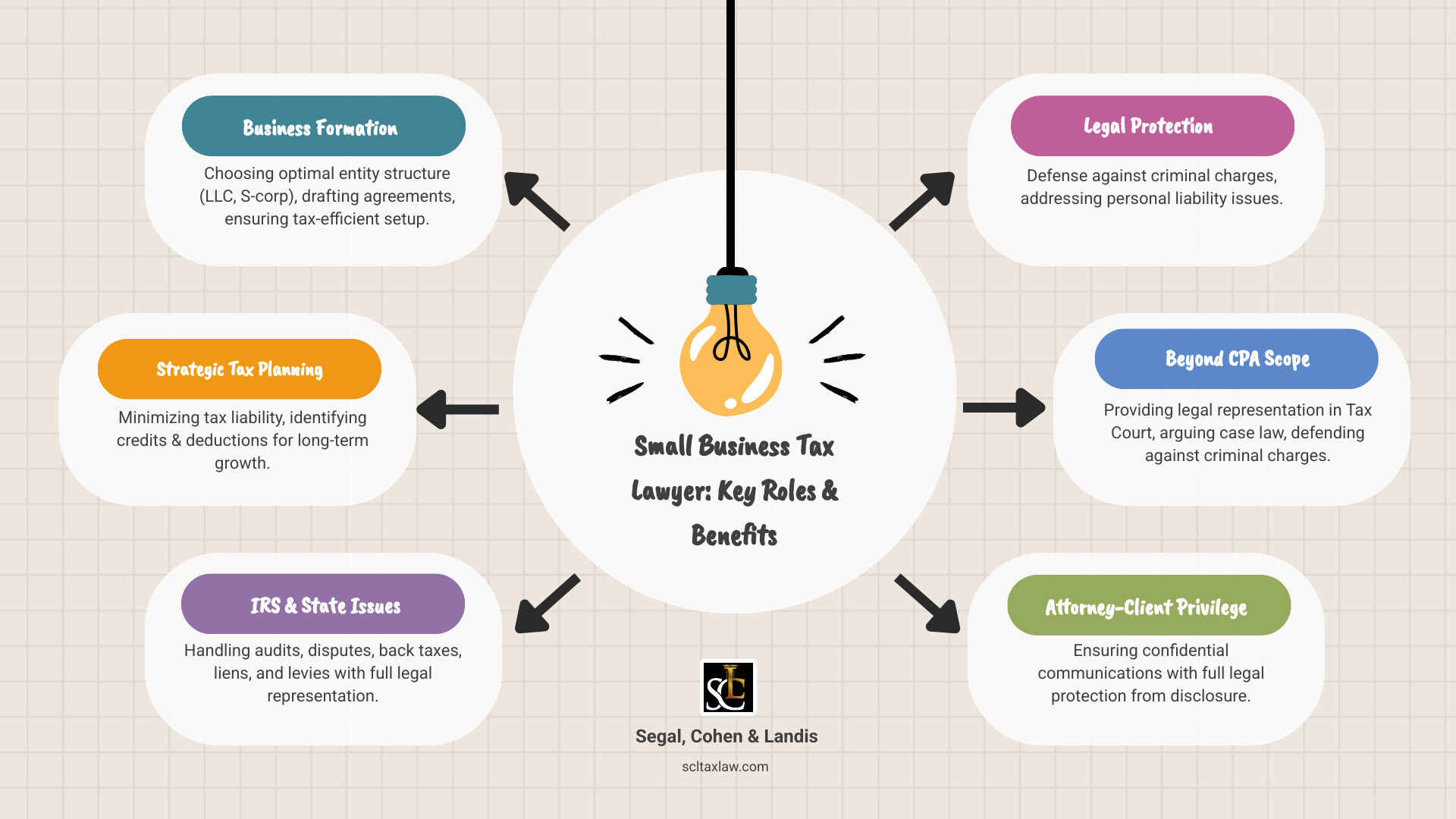
A Tax lawyer for small business is a licensed attorney who specializes in tax law, offering legal representation, strategic tax planning, and protection through attorney-client privilege that goes beyond what a CPA can provide. They defend your business in audits, disputes, and Tax Court, while also helping you structure your company to minimize tax liability from the start.
When You Need a Tax Lawyer for Your Small Business:
- Facing an IRS audit or state tax examination – Legal representation with full attorney-client privilege
- Dealing with significant tax debt – Negotiating Offers in Compromise or installment agreements
- Starting or restructuring your business – Choosing the optimal entity structure (LLC, S-corp, partnership)
- Threatened with criminal charges – Defense against allegations of tax fraud or misuse of funds
- Navigating complex transactions – Mergers, acquisitions, real estate deals, or international operations
- Personally liable for business taxes – Trust fund recovery penalties or sales tax issues
Tax attorneys have in-depth knowledge of tax law principles and current case law precedents. They’re experts in negotiations and arguing your case in court—capabilities that distinguish them from accountants who focus primarily on preparation and filing. Attorney-client privilege may protect confidential communications seeking legal advice, subject to exceptions and waiver. It does not protect every conversation or underlying record.
For small business owners, tax planning affects more than just your bottom line; it affects your entire business operation. Cash-intensive businesses face particular scrutiny from the IRS, which uses specialized audit techniques to target restaurants, construction companies, retail shops, and other businesses that handle significant cash transactions. Mistakes can create civil tax, interest and penalties. Specified willful criminal conduct can result in prosecution, fines and imprisonment; the offense and its proven elements determine the penalty.
This guide discusses tax lawyer for small business. Review the applicable rules and facts, and verify the qualifications and scope of any proposed representation.
Tax lawyer for small business helpful reading:
Why Choose a Tax Lawyer for Your Small Business?

Running a small business is a demanding endeavor, and navigating the labyrinth of tax laws can feel like a full-time job in itself. While many small business owners rely on CPAs for their day-to-day accounting and tax preparation, there are crucial situations where the specialized expertise of a tax lawyer for small business becomes not just beneficial, but essential. It’s about securing comprehensive legal protection and strategic guidance that only a legal professional can provide.
Core Functions and Qualifications
A tax lawyer for small business offers a distinct set of services that go beyond mere number crunching. Our role involves a deep understanding of tax law principles, current case law precedents, and the ability to interpret complex regulations. We’re not just preparing your tax returns; we’re providing legal counsel on how to comply, minimize liabilities, and strategically plan for your business’s future.
Here’s a snapshot of what we do:
- Legal Expertise: We possess an in-depth knowledge of federal and state tax codes, offering legal interpretations and advice that can protect your business from potential pitfalls. We stay up-to-date on compliance through continuing legal education (CLE), ensuring we’re always informed about the latest changes.
- Strategic Planning: Discuss the work needed for your circumstances and confirm that the proposed representative has the relevant qualifications and that the engagement covers it.
- Dispute Resolution & Litigation: Discuss the work needed for your circumstances and confirm that the proposed representative has the relevant qualifications and that the engagement covers it.
- Legal Documentation & Structuring: Discuss the work needed for your circumstances and confirm that the proposed representative has the relevant qualifications and that the engagement covers it.
Verify the professional’s current credentials and experience relevant to the matter. Confirm who will perform each legal, accounting or filing task and what the engagement includes.
The Deciding Factor: Attorney-Client Privilege
Perhaps the most significant differentiator between a tax lawyer for small business and a CPA lies in the protection of attorney-client privilege. Attorney-client privilege may protect confidential communications seeking legal advice, subject to exceptions and waiver. It does not automatically protect underlying records or every discussion.
Why is this so crucial for your small business?
- Open Discussion: It allows you to speak openly and honestly about all aspects of your tax situation, including sensitive or potentially problematic issues, without fear that these discussions could later be used against you by tax authorities.
- Comprehensive Strategy: This privilege enables us to gather all necessary information to develop the most effective legal strategy for your business, knowing that every detail shared remains secure.
- Improved Protection: While CPAs also maintain client confidentiality, their communications are generally not protected by the same level of legal privilege as those with an attorney, especially when criminal charges are a possibility. When the stakes are high, attorney-client privilege provides an invaluable shield.
Understanding the full scope of potential issues is vital for effective legal representation. For more in-depth information about common challenges, you can explore More info about business tax problems.
Key Advantages of Working with a Tax Lawyer

When to Hire a Tax Lawyer for Small Business: Critical Scenarios
Identify the legal, accounting and administrative work needed for the particular matter. Confirm the representative’s qualifications and authority and describe the covered work and responsibilities in the engagement agreement.
During IRS or State Audits and Disputes
Identify the legal, accounting and administrative work needed for the particular matter. Confirm the representative’s qualifications and authority and describe the covered work and responsibilities in the engagement agreement.
- Expert Representation: Discuss the work needed for your circumstances and confirm that the proposed representative has the relevant qualifications and that the engagement covers it.
- Negotiation and Dispute Resolution: Discuss the work needed for your circumstances and confirm that the proposed representative has the relevant qualifications and that the engagement covers it. Related resources: Business Tax Audit.
- Protecting Your Interests: If you’re a cash-intensive business, the IRS might attempt to reconstruct your income based on indirect methods or even personal living expenses. We ensure that any such reconstructions are fair and accurate, challenging improper assessments and protecting your business from overreaching demands.
For Business Formation and Strategic Structuring
The decisions you make when forming or restructuring your business have profound tax implications. A tax lawyer for small business can provide invaluable guidance to ensure your business is set up for optimal tax efficiency and legal compliance from day one.
- Choosing the Right Entity: Discuss the work needed for your circumstances and confirm that the proposed representative has the relevant qualifications and that the engagement covers it.
- Tax-Efficient Setup: Discuss the work needed for your circumstances and confirm that the proposed representative has the relevant qualifications and that the engagement covers it.
- Mergers and Acquisitions: Discuss the work needed for your circumstances and confirm that the proposed representative has the relevant qualifications and that the engagement covers it.
When Facing Significant Tax Debt or Collections
Tax debt can feel overwhelming, but it’s not impossible. A tax lawyer for small business can help you explore resolution options with the IRS and state tax authorities, protecting your assets and your business’s future.
- Offers in Compromise (OIC): If you can’t pay your full tax debt, we can help determine if you qualify for an Offer in Compromise, allowing you to settle your debt for a lower amount. This is often referred to as the “Fresh Start Program” and can provide much-needed relief for businesses facing financial hardship.
- Installment Agreements: We can negotiate manageable payment plans with the IRS, preventing aggressive collection actions like wage garnishments, bank levies, or property seizures.
- Dealing with Liens and Levies: If the IRS has placed a Tax Lien on your property or issued a Tax Levy on your bank accounts or wages, we can work to have these removed or released, protecting your business’s ability to operate.
- Statute of Limitations: It’s important to know that the IRS has a 10-year statute of limitation for collecting taxes. We can help determine if the statute has expired on older tax debts, which could significantly impact your resolution options.
In Cases of Potential Tax Fraud or Criminal Charges
This is perhaps the most serious scenario where a tax lawyer for small business is not just recommended, but absolutely critical. Allegations of tax fraud or criminal tax charges carry severe penalties, including hefty fines and imprisonment.
- Defense Against Allegations: The IRS aggressively pursues perceived tax obligation failures, especially when misuse of company funds for personal expenses is involved. Actions like falsifying tax returns, hiding unreported income, or misrepresenting personal expenses as business costs can lead to criminal charges. We defend your rights and build a strong legal case to protect your freedom and your business.
- Payroll Tax Issues: Federal trust-fund payroll taxes include withheld income tax and employees’ share of Social Security and Medicare taxes. State sales taxes have separate rules. If these “trust fund taxes” are not paid, the IRS can assess a Trust Fund Recovery Penalty against the responsible individuals. We can help you steer these complex issues and defend against personal liability. Learn more about Resolving Payroll Tax Issues.
- Attorney-Client Privilege: In cases with potential criminal implications, the attorney-client privilege is paramount. It may protect qualifying confidential communications for legal advice, subject to exceptions and waiver; counsel can explain the limits before you share information.
The Tangible Benefits of a Tax Lawyer’s Expertise
Hiring a tax lawyer for small business isn’t just about avoiding trouble; it’s about proactively safeguarding your financial health and fostering sustainable growth. The benefits extend far beyond simply resolving immediate tax problems, offering long-term financial security and peace of mind.
How a Tax lawyer for a small business Can Reduce Your Tax Burden
One of the most compelling advantages of partnering with a tax attorney is our ability to strategically reduce your business’s tax burden. This isn’t about cutting corners; it’s about smart, legal tax planning.
- Strategic Tax Planning: We dig into your business operations, analyzing financial data and future plans to identify opportunities for tax savings. This includes advising on the timing of income and expenses, asset purchases, and inventory management.
- Identifying Deductions and Credits: Tax laws are riddled with deductions and credits that many small businesses overlook. We have the expertise to uncover these, ensuring your business takes advantage of every available opportunity to lower its taxable income. This could range from research and development credits to specific industry incentives.
- Minimizing Liabilities: By understanding your business’s unique aspects, we can devise strategies that legally reduce your overall tax liabilities. This includes advice on structuring employee benefits, executive compensation, and even wealth and succession planning to protect your business’s future and your personal assets.
- Ensuring Compliance: While minimizing taxes, we always prioritize full compliance with federal, state, and local tax laws. This proactive approach helps prevent future audits, penalties, and legal messs, saving you significant time, money, and stress.
Navigating Complex Tax Laws and Regulations
The tax landscape is a constantly shifting terrain. Federal tax code, state and local tax (SALT) laws, and evolving case law precedents combine to create an intricate web that can be daunting for any business owner.
- Review the relevant notices, filing history, records, and deadlines before choosing a response. Evaluate professional assistance according to the facts, applicable law, and agreed scope of representation.
- Staying Current: Tax attorneys must undergo continuing legal education (CLE) to stay up-to-date on tax compliance and new legislation. This commitment ensures that we are always informed about the latest changes, such as those brought by the 2017 Tax Act or other significant legislative developments, and how they impact your business.
- State and Local Expertise: Discuss the work needed for your circumstances and confirm that the proposed representative has the relevant qualifications and that the engagement covers it.
The Ultimate Protection: Attorney-Client Privilege
We’ve touched on this before, but it bears repeating because it truly is the ultimate protection. The attorney-client privilege is a cornerstone of our legal system, protecting qualifying confidential communications for legal advice, subject to exceptions and waiver.
- Shielding Conversations: Qualifying confidential communications for legal advice may be protected. The privilege has exceptions, may be waived and does not shield underlying records from lawful disclosure.
- Protecting Sensitive Information: In an era where data security is paramount, this legal protection extends to sensitive financial information and strategic business decisions discussed within the attorney-client relationship.
- Encouraging Full Disclosure: Knowing that your conversations are privileged encourages you to be completely open and honest with us. This transparency is vital for us to fully understand your situation and formulate the most robust and effective legal strategy. This level of protection offers invaluable peace of mind, especially when dealing with complex or high-stakes tax matters. For a deeper dive into how this privilege benefits you, consider reading about Key insights from business tax attorneys.
Frequently Asked Questions about Small Business Tax Lawyers
Review the relevant notices, filing history, records, and deadlines before choosing a response. Evaluate professional assistance according to the facts, applicable law, and agreed scope of representation.
What specific services does a tax lawyer offer for small businesses?
Confirm consultation terms, fees and the scope of any proposed work before scheduling or retaining counsel.
Topics to discuss with the proposed representative and expressly address in the engagement include:
- IRS and State Tax Audit Defense: Representing your business during audits by federal or state tax authorities, negotiating on your behalf, and challenging assessments.
- Tax Dispute Resolution: Handling tax controversies, appeals, and litigation with the IRS or state agencies.
- Tax Planning and Strategy: Developing proactive strategies to minimize tax liabilities, identify deductions and credits, and ensure compliance.
- Business Formation and Structuring: Advising on the optimal legal and tax structure for new businesses or those undergoing changes (LLC, S-corp, partnership).
- Tax Debt Resolution: Negotiating Offers in Compromise, installment agreements, and addressing tax liens or levies.
- Payroll Tax Issues: Guiding businesses through complex payroll tax compliance, defending against Trust Fund Recovery Penalties, and addressing employee classification issues.
- International Tax Matters: Assisting businesses with cross-border tax issues, foreign account disclosures (FBAR), and foreign earned income exclusion for U.S. citizens abroad.
- Defense Against Tax Fraud: Providing legal defense in cases of alleged tax fraud or criminal tax charges.
Essentially, if a tax issue has a legal dimension, we are the professionals you need.
How much does it cost to hire a tax lawyer for a small business?
Request written engagement terms describing the scope of work, billing method, rates, retainer and additional costs. Fees vary by matter; confirm the terms before retaining counsel. Related resources: $100 per hour to over $500.
Review the relevant notices, filing history, records, and deadlines before choosing a response. Evaluate professional assistance according to the facts, applicable law, and agreed scope of representation.
Can a tax lawyer help my business even if we’re not in trouble with the IRS?
Absolutely! This is a common misconception. Many small business owners only consider engaging a tax lawyer when they are already facing an audit, a dispute, or significant tax debt. However, proactive tax planning is a core service that can provide immense value and prevent future problems.
A tax lawyer for small business can help you:
- Structure for Optimal Tax Efficiency: From the very beginning, we can help you choose the best legal entity for your business to minimize tax liability and maximize benefits.
- Advise on Major Transactions: Before you make significant business decisions like buying property, investing, or expanding, we can advise on the tax implications to ensure you’re making informed choices.
- Ensure Ongoing Compliance: We keep your business updated on changes in tax laws and regulations, helping you maintain compliance and avoid potential penalties.
- Identify Tax Savings: We can uncover overlooked deductions, credits, and incentives that can significantly reduce your tax burden, putting more money back into your business.
Engaging a tax lawyer proactively is an investment in your business’s long-term financial health and legal security. It can potentially save you significant money and future legal trouble by preventing issues before they arise.
Your Partner in Financial Security and Growth
For small business owners, the journey is often filled with passion, innovation, and hard work. But it’s also fraught with complexities, especially when it comes to taxes. Understanding the critical role a tax lawyer for small business plays can be a game-changer for your company’s stability and growth.
Here are our key takeaways:
- Hire for Disputes: When facing IRS or state tax audits, disputes, or collections, a tax lawyer provides essential legal representation and negotiation expertise.
- Use for Structuring: Proactively engage a tax lawyer for business formation, restructuring, and strategic planning to ensure tax efficiency and compliance.
- Benefit from Privilege: The attorney-client privilege offers unparalleled confidentiality, allowing you to discuss sensitive matters openly and build a robust legal strategy.
- Save Money Long-Term: Strategic tax planning and expert guidance can lead to significant tax savings, reduced liabilities, and protection against costly penalties.
Contact Segal, Cohen & Landis to discuss the tax matter, relevant notices and deadlines, and available response options. Confirm the qualifications of the proposed representative and the scope of the engagement.
Don’t let tax complexities hinder your business’s potential. For comprehensive help with audits, back taxes, and strategic planning, explore our Tax Services. We’re here to help you steer the tax landscape with confidence and peace of mind.
Have questions about this topic? Talk to an IRS attorney today.
Segal, Cohen & Landis, P.C. — Beverly Hills. Serving clients nationwide.

Samuel Landis, Esq.
LL.M. (Tax) · Selected to Super Lawyers®
Sam Landis is a Beverly Hills IRS tax attorney specializing in IRS collection defense, audit representation, and international tax compliance for foreign nationals and US expats.