

When Your Paycheck Shrinks Without Warning: What You Need to Know
Can an employer garnish wages without consent? The short answer is: your employer doesn’t need your consent — but in almost every case, they do need a legal order before they can touch your paycheck.
Here’s what that means in practice:
| Situation | Court Order Required? | Employee Consent Required? |
|---|---|---|
| Credit card / medical debt | Yes | No |
| IRS tax levy | No | No |
| Federal student loan default | No | No |
| Child support / alimony | No | No |
| Voluntary wage assignment | No | Yes |
The key takeaway:
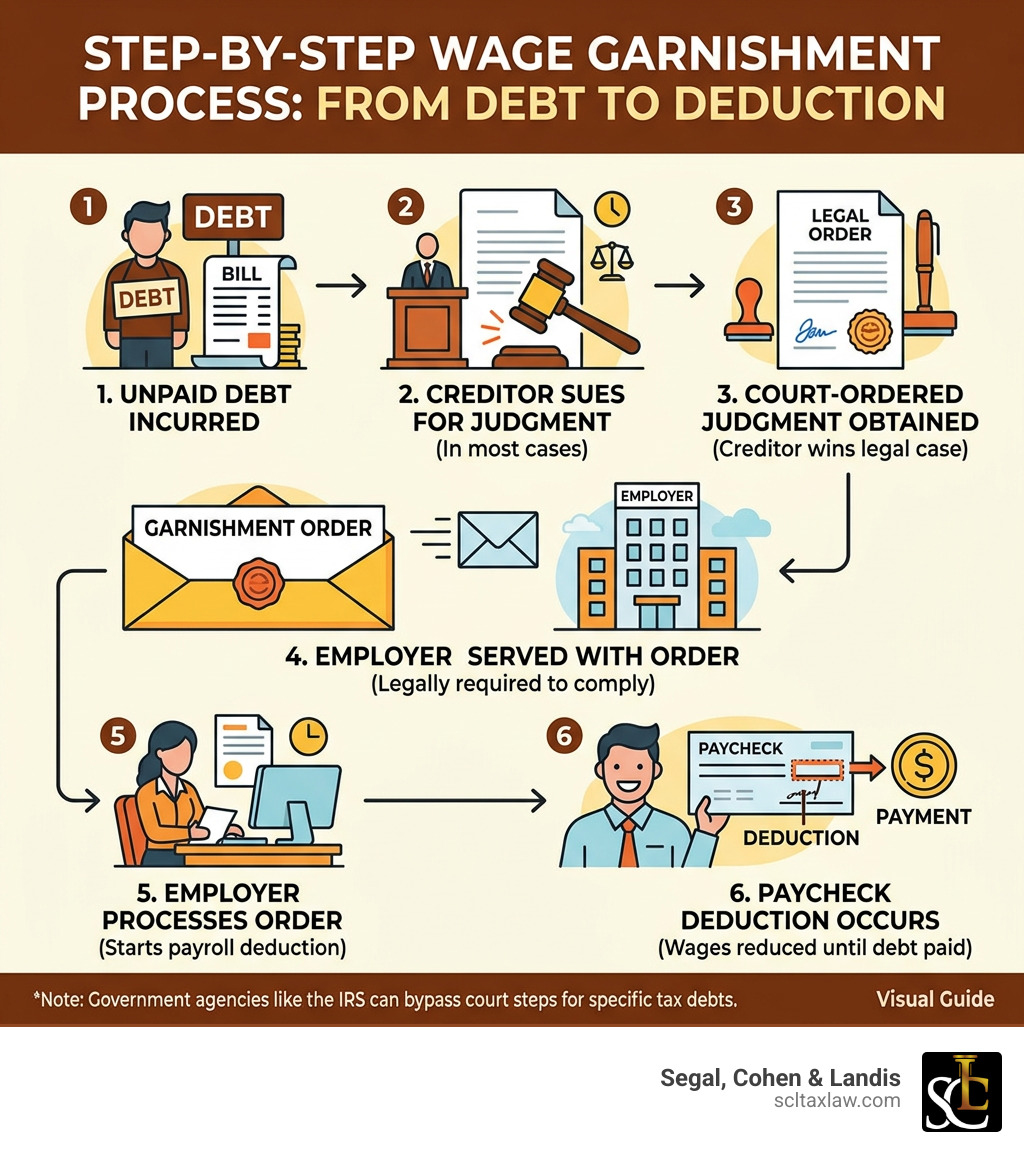
- Most private creditors must sue you and win a judgment first
- Federal agencies like the IRS can bypass the courts entirely
- Your employer is legally required to comply once a valid order arrives — regardless of how you feel about it
So while you won’t find your employer deciding on their own to take money from your check, the process can still feel like a sneak attack. Garnishment orders can arrive at your employer’s payroll department before you even realize a judgment exists — especially if court notices went to an old address or were missed entirely.
That gap between “legally notified” and “actually informed” is where most people get blindsided.
can an employer garnish wages without consent: Review the relevant notices, filing history, records, and deadlines before choosing a response. Evaluate professional assistance according to the facts, applicable law, and agreed scope of representation.
Understanding the Legal Process: Can an Employer Garnish Wages Without Consent?

At its core, Wage Garnishment is a legal procedure where a portion of your earnings is withheld by your employer to pay off a debt. The most common question we hear at Segal, Cohen & Landis is whether this can happen without the employee saying “yes.”
The reality is that consent is rarely part of the equation. Instead, the process relies on a money judgment or a statutory right. Under 15 U.S.C. § 1673 Federal law places limits on how much judgment creditors can take, the power to garnish is granted by the government or a court, not the individual debtor.
When a Money Judgment is Required
For ordinary consumer debts—think credit cards, medical bills, or personal loans—a creditor cannot simply call your boss and demand money. They must first file a lawsuit against you. If you lose the case (or fail to respond, leading to a default judgment), the court issues a money judgment. This judgment turns the creditor into a “judgment creditor,” giving them the legal authority to seek a garnishment order. If you’ve been blindsided by a sudden deduction, it often means a legal summons was sent to an old address or you didn’t realize the severity of a pending lawsuit. If the debt is tax-related, however, the rules change significantly, which is why consulting a tax debt lawyer is often the first step in mounting a defense.
The Employer’s Legal Obligation to Comply
Once your employer receives a garnishee notice or a writ of garnishment, they aren’t acting as your “enemy”—they are acting as a neutral third party with a legal mandate. In fact, if an employer refuses to garnish wages after receiving a valid order, they can be held personally liable for the entire amount of your debt. Our Wage Garnishments Featured Article explains that payroll departments must prioritize these orders to avoid stiff penalties. Your consent isn’t required because the law views the employer as holding money (your wages) that legally belongs to the creditor once the order is served.
The “No-Court-Order” Exceptions: When Consent Isn’t Required
While most creditors have to jump through the hoops of a courtroom, certain “super-creditors” have the power of administrative levy. This means they can take money directly from your check without ever seeing a judge. This is often where the “sneak attack” feeling is strongest.
IRS Tax Levies and Administrative Garnishment
The IRS is the most powerful entity when it comes to collections. Under 26 U.S.C. § 6334, the federal government can garnish your wages for back taxes without a court judgment. However, they must follow a specific notification process:
- They send a Notice of Intent to Levy.
- They send a Final Notice of Intent to Levy, which gives you a 30-day window to request a hearing.
If you ignore these notices, the IRS will send a Form 668-W to your employer. At that point, the automated collection machine begins. The Federal Tax Levy: A Harbinger of Exaction describes this as one of the most aggressive tools in the government’s arsenal. If you find yourself in this position, our Stop IRS Wage Garnishment Complete Guide provides the roadmap for halting the process.
Federal Student Loans and Child Support Obligations
The IRS isn’t alone in its administrative powers. The Department of Education can also initiate an administrative garnishment for federal student loans if you are in default. They can typically take up to 15% of your disposable earnings without a court order, provided they give you 30 days’ notice.
Similarly, child support and alimony orders often include automatic income withholding. Since 1988, most support orders are “immediate,” meaning the garnishment starts as soon as the order is signed, ensuring that family obligations are met before other debts are paid.
Federal Limits and the Definition of Disposable Earnings
Even though your consent isn’t required, the law doesn’t allow creditors to take your entire paycheck. You are protected by the Consumer Credit Protection Act (CCPA), which sets a ceiling on how much can be taken.
The amount that can be taken is calculated based on your disposable earnings. According to Ga. Code § 18-4-1, disposable earnings are what’s left after mandatory deductions like federal, state, and local taxes, and Social Security. Voluntary deductions—like health insurance premiums, 401(k) contributions, or union dues—are usually not subtracted when calculating the garnishable amount.
Calculating Your Protection Under the CCPA
For most ordinary debts (credit cards, medical bills), the weekly garnishment cannot exceed the lesser of:
- 25% of your disposable earnings.
- The amount by which your disposable earnings exceed 30 times the federal minimum wage ($7.25 x 30 = $217.50).
If you make $217.50 or less in disposable income per week, your wages cannot be garnished for ordinary debts at all. If the garnishment is causing you to be unable to pay for basic necessities, you may qualify for The Hardship Escape: How to Apply for Garnishment Relief.
How State Laws Affect Wage Garnishment Limits
Federal law provides the “floor” for protection, but states can choose to be more generous to employees. For example, Ga. Code § 18-4-5 outlines Georgia’s adherence to these limits, but also notes specific protections for certain types of income.
In California, the limits are even stricter. Generally, a creditor can only take the lesser of 20% of disposable earnings or 40% of the amount exceeding 48 times the applicable hourly minimum wage for weekly pay, with adjustments for other pay periods; tax orders follow different rules. Since California’s minimum wage is significantly higher than the federal rate, this often protects a much larger portion of your paycheck.
Employee Rights and Protections Against Termination
One of the biggest fears employees have is that a garnishment will lead to them losing their job. Employers often find the administrative burden of garnishment annoying, but federal law protects you.
Under 15 U.S.C. § 1674, an employer is prohibited from discharging any employee because their earnings have been subjected to garnishment for any one indebtedness. This protection is vital for job security. However, be aware that if you have multiple garnishments for different debts, this federal protection may no longer apply.
What to Do if Your Employer Garnishes Wages Without Consent
If you see a deduction you weren’t expecting, your first step should be to verify the notice. Ask your HR or payroll department for a copy of the garnishment order. Sometimes, payroll errors occur, or the order might be for someone with a similar name.
If the garnishment is from the IRS and you believe it is improper, you can fight back by Follow the actual qualifying notice’s deadline to request a Collection Due Process hearing on Form 12153. Equivalent hearings, Collection Appeals Program review and levy-release requests have different requirements and effects. This allows you to raise legal objections and present alternatives to the levy.
How to Stop or Challenge a Wage Garnishment
You aren’t helpless once a garnishment starts. Here are the most common ways to stop the bleeding:
- For a private-creditor garnishment, a court claim of exemption may be available under the applicable state procedure. IRS wage levies use the federal exemption rules and separate IRS appeal or release procedures
- Bankruptcy: Filing for bankruptcy triggers an “automatic stay,” which immediately halts most garnishments.
- Offer in Compromise: For tax debts, you can negotiate to settle your debt for less than you owe.
- IRS Levy Release: If we can prove the levy is causing immediate economic hardship, we can often secure an IRS Levy Release to stop the deductions.
Frequently Asked Questions about Wage Garnishment
Can a debt collector garnish my wages without telling me?
Legally, no. You must be given “due process.” This usually involves a summons for a lawsuit and a notice of the judgment. However, many people feel they weren’t told because mail was sent to an old address, a process server made a mistake, or they simply didn’t understand the legal jargon in the envelopes they received.
What is the most they can garnish from my paycheck?
For ordinary debts, the cap is 25% of disposable income. However, for child support, the limits are much higher—up to 50% if you are supporting another child or spouse, and up to 60% if you are not. If you are more than 12 weeks behind (in arrears), these limits can increase to 55% or 65%.
Are Social Security benefits protected from garnishment?
Generally, yes. Section 207 of the Social Security Act protects these benefits from most creditors. However, the federal government can still “offset” your Social Security for unpaid federal taxes or defaulted student loans (usually capped at 15%). Banks are also required to protect two months’ worth of direct-deposited federal benefits from being frozen in your account.
Conclusion
Review the relevant notices, filing history, records, and deadlines before choosing a response. Evaluate professional assistance according to the facts, applicable law, and agreed scope of representation.
Review the relevant notices, filing history, records, and deadlines before choosing a response. Evaluate professional assistance according to the facts, applicable law, and agreed scope of representation. Related resources: Stop Wage Garnishment Today.
Have questions about this topic? Talk to an IRS attorney today.
Segal, Cohen & Landis, P.C. — Beverly Hills. Serving clients nationwide.

Samuel Landis, Esq.
LL.M. (Tax) · Selected to Super Lawyers®
Sam Landis is a Beverly Hills IRS tax attorney specializing in IRS collection defense, audit representation, and international tax compliance for foreign nationals and US expats.