


Why Finding Top Rated Tax Attorneys Near Me Can Save Your Financial Future
Top rated tax attorneys near me are legal professionals who specialize in resolving complex federal and state tax issues, from IRS audits and back taxes to wage garnishments and criminal tax investigations. If you’re facing serious tax problems, here’s how to find the right attorney quickly:
Quick Steps to Find Top Rated Tax Attorneys:
- Search State Bar Associations – Verify licensing and check for disciplinary actions
- Use the IRS Directory – Find credentialed tax professionals at irs.treasury.gov/rpo
- Check Specialization – Look for attorneys who focus specifically on your issue (audits, levies, business taxes)
- Read Client Reviews – Assess real experiences with tax resolution outcomes
- Verify Credentials – Confirm active license and good standing with your state bar
- Schedule Free Consultations – Many attorneys offer no-obligation case reviews
When the IRS sends threatening notices or your wages are about to be garnished, every day counts. Tax problems don’t go away on their own—they compound with penalties and interest. The difference between hiring a qualified tax attorney and trying to handle complex tax matters yourself can mean thousands of dollars and years of financial stress.
Discuss the notice, disputed issues, available procedures and evidence with a qualified representative. Confirm the scope of engagement. Outcomes and timing depend on the facts and applicable requirements.
This guide discusses top rated tax attorneys near me guide. Review the applicable rules and facts, and verify the qualifications and scope of any proposed representation.
Easy top rated tax attorneys near me glossary:
Tax Attorney vs. Other Tax Professionals: Who Should You Call?
When tax issues arise, many people wonder whether they need a Certified Public Accountant (CPA) or a tax attorney. While both professionals deal with financial matters, their roles, expertise, and the legal protections they offer are distinctly different. Understanding these differences is crucial for choosing the right professional for your specific tax situation.

Understanding the Core Roles and Training
Let’s start by clarifying what each professional brings to the table.
Certified Public Accountants (CPAs): The Financial Navigators
CPAs are licensed accounting professionals who specialize in preparing and auditing financial statements, general tax compliance, and financial planning. Their primary focus is on the numerical aspects of your financial life. The path to becoming a CPA is rigorous:
- Education: They must typically earn a college degree, usually in accounting or a related business field, completing at least 150 hours of college coursework. This often means five years of college or a master’s degree.
- Examination: They must pass a challenging four-part CPA exam.
- Licensing: CPAs are licensed by state Boards of Accountancy and must adhere to a strict code of professional conduct, often set by organizations like the American Institute of Certified Public Accountants (AICPA). They are also required to complete continuing education to maintain their licenses.
CPAs excel at:
- Preparing and filing routine income tax returns for individuals and businesses.
- Identifying tax credits and deductions.
- General tax planning and compliance.
- Business consulting, including advising on setting up new businesses (sole proprietorship, partnership, LLC, S corporation).
- Assisting with financial statement audits.
Tax Attorneys: The Legal Strategists
Tax attorneys, on the other hand, are legal professionals specializing in the complex field of tax law. Their expertise lies in interpreting tax codes, representing clients in disputes with tax authorities, and navigating the legal intricacies of tax-related matters. Their training is focused on the legal aspects of taxation:
- Education: They must first earn a Juris Doctor (J.D.) degree from an accredited law school, which typically takes three years. Many tax attorneys further specialize by obtaining an LL.M. (Master of Laws) in Taxation.
- Examination: They must pass a state bar exam, which is typically a two-day test, to be licensed to practice law.
- Licensing: Tax attorneys are licensed by state bar associations and are also required to complete continuing legal education.
The role of a tax attorney primarily involves:
- Legal Representation: Defending clients in audits, appeals, and litigation against the IRS or state tax agencies.
- Tax Law Interpretation: Providing expert advice on complex tax laws and regulations, especially in ambiguous or high-stakes situations.
- IRS Dispute Resolution: Negotiating with tax authorities for favorable outcomes in cases of back taxes, penalties, and interest.
- Criminal Tax Matters: Representing individuals or businesses facing investigations for tax fraud or evasion.
- Complex Financial Structuring: Advising on the tax implications of significant business transactions, mergers, acquisitions, and intricate estate planning.
When to Hire a Tax Attorney
While a skilled CPA can handle many tax-related tasks, there are specific situations where the legal expertise and protections offered by a tax attorney become indispensable. We often see clients facing situations that necessitate the unique skills of a tax attorney, especially when legal interpretation, negotiation, or litigation is involved.
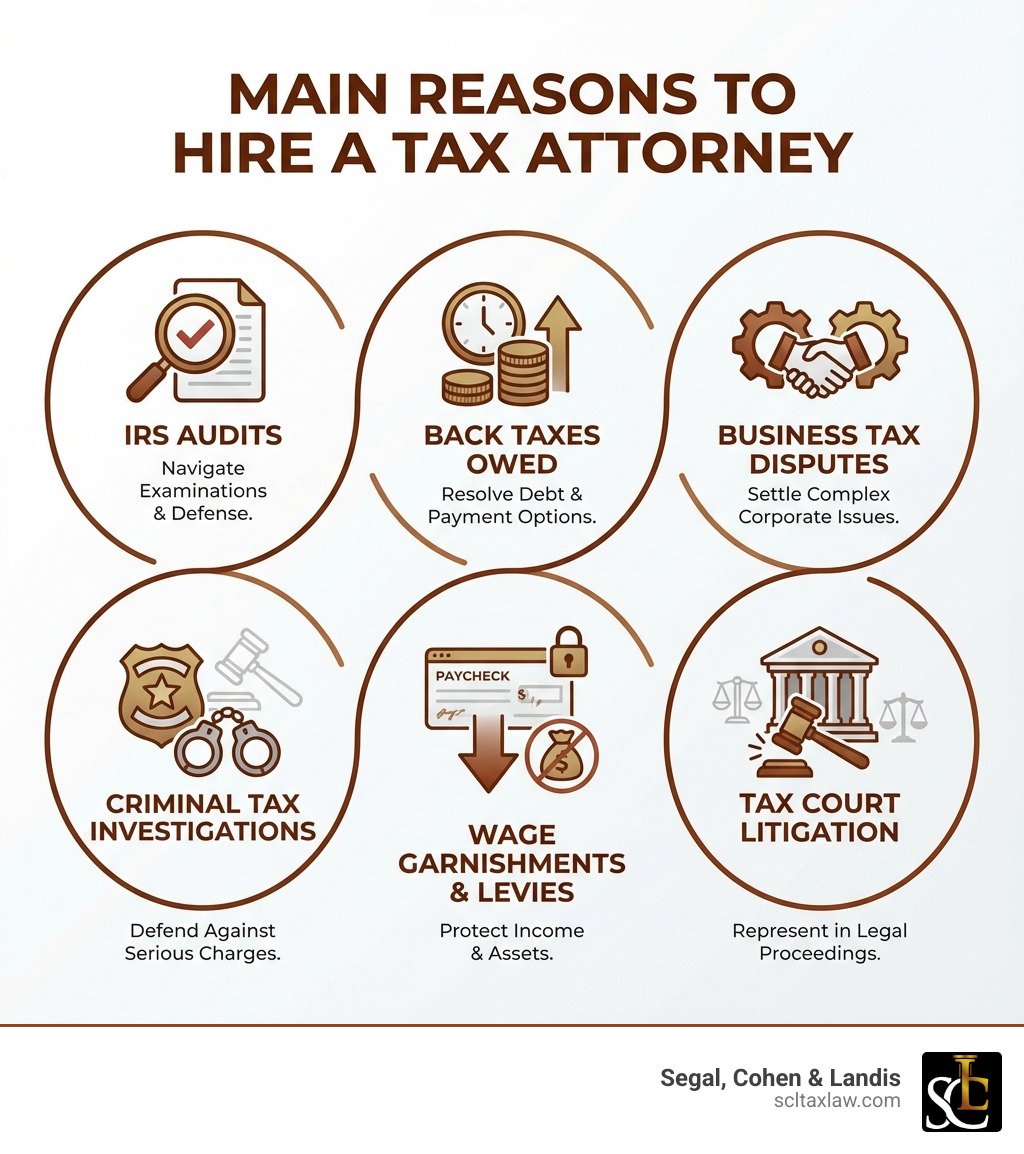
You should consider hiring a tax attorney when facing:
- IRS Audit Representation: If an audit progresses beyond a simple inquiry or if legal issues arise (e.g., entitlement to a deduction, potential penalties), a tax attorney can represent your interests and ensure your rights are protected.
- Tax Court Litigation: If your tax dispute cannot be resolved through administrative appeals and requires a court appearance, a tax attorney is essential. They are trained in courtroom procedures and legal argumentation.
- Criminal Tax Investigations: This is a critical scenario. If you are being investigated for tax fraud or evasion, a tax attorney should be your very first call. The attorney-client privilege is paramount here, offering protection that a CPA cannot provide in the same way.
- Discuss the notice, disputed issues, available procedures and evidence with a qualified representative. Confirm the scope of engagement. Outcomes and timing depend on the facts and applicable requirements. Related resources: Tax Levy; Wage Garnishment.
- Complex Estate Planning: While CPAs can help with financial aspects, a tax attorney can draft and review legal documents, set up trusts, and ensure your estate plan minimizes tax liabilities while adhering to all legal requirements.
- Business Formation and Transactions: For structuring new businesses, mergers, acquisitions, or other significant corporate actions, a tax attorney ensures these transactions are tax-efficient and legally sound, preventing future complications.
- Attorney-Client Privilege: This is a cornerstone of legal representation. Communications with a tax attorney are typically protected by attorney-client privilege, offering a higher level of confidentiality than with a CPA. This privilege is vital in sensitive tax matters where full disclosure is necessary without fear of self-incrimination.
When Might You Need Both?
In complex financial situations involving multiple business interests, properties, or trusts, it’s not uncommon to need the combined expertise of both a CPA and a tax attorney. A CPA can handle the detailed accounting and compliance, while a tax attorney provides legal counsel, interprets complex tax law, and represents you in legal disputes. They can work in tandem to ensure all financial and legal bases are covered, offering you comprehensive protection and peace of mind.
How to Find Top Rated Tax Attorneys Near Me
Contact Segal, Cohen & Landis to discuss the matter. Verify the proposed representative’s qualifications, meeting arrangements and scope of engagement; do not assume a particular result or completion time.

Starting Your Search for a Local Professional
The first step in finding top rated tax attorneys near me is knowing where to look and understanding the value of local expertise.
- State Bar Associations: Each state has a bar association that licenses and regulates attorneys. You can use their websites to verify an attorney’s license, practice areas, and check for any disciplinary actions. This is a crucial step in ensuring you’re considering legitimate professionals.
- IRS Online Directory: The IRS maintains an online directory of tax return preparers who hold professional credentials, including CPAs and attorneys. This can be a valuable resource for finding qualified individuals.
- Review the relevant notices, filing history, records, and deadlines before choosing a response. Evaluate professional assistance according to the facts, applicable law, and agreed scope of representation.
- Benefits of Local Expertise: Hiring a local tax professional, especially a tax attorney, offers significant advantages. They often have a better understanding of local tax laws, regulations, and the nuances of working with regional tax agencies. For example, in California, understanding the specific rules of the Employment Development Department (EDD) for payroll tax audits is critical, and a local attorney will have that specialized knowledge. A local presence also allows for convenient in-person meetings and fosters a more personal attorney-client relationship.
Vetting Your Candidates: How to Choose from Top Rated Tax Attorneys Near Me
Once you have a list of potential candidates, it’s time to vet them thoroughly. This is where you separate the good from the truly top rated tax attorneys near me.
- Specialization: Tax law is vast. Look for an attorney who specializes in your specific issue. For example, if you’re facing an IRS audit, you’ll want an attorney with a strong background in IRS Audit Defense. If you own a business, a lawyer specializing in Business Tax Law will be more beneficial than a general tax practitioner.
- Contact Segal, Cohen & Landis to discuss the tax matter, relevant notices and deadlines, and available response options. Confirm the qualifications of the proposed representative and the scope of the engagement.
- Client Testimonials and Reviews: What past clients say can provide great insight into an attorney’s approach, effectiveness, and communication style. Look for consistent positive feedback. We encourage you to read our client reviews to understand the impact we’ve had on people’s lives. An A+ rating with the Better Business Bureau (BBB) and numerous five-star reviews, as seen with other reputable firms, are also strong indicators of client satisfaction.
- Communication Style: You need an attorney with whom you can communicate effectively and who makes you feel heard and understood. During initial consultations, assess their responsiveness and clarity. You don’t want to hire a lawyer who won’t return your calls or avoids prompt communication.
- Peer Endorsements: Endorsements from fellow lawyers, often found on professional directories, can signify that an attorney is respected within the legal community. This peer recognition speaks volumes about their competence and ethical practice.
Verifying Credentials and Licensing
Before making any commitments, always verify the credentials and licensing of any potential tax attorney. This due diligence protects you from unqualified individuals.
- State Bar Website: Check the relevant state’s bar association website. For example, if you’re in Los Angeles, you’d check the State Bar of California. This confirms if the attorney is licensed to practice and if they have any disciplinary actions against them.
- Online Verification Tools: Some platforms like cpaverify.org can help verify CPA credentials, and similar tools or direct checks with state licensing boards are available for attorneys.
Understanding the Costs
Discussing fees upfront is essential for transparency and avoiding surprises. The cost of hiring a tax attorney can vary significantly based on the complexity of your case, the attorney’s experience, and your geographic location.
- Hourly Rates: Ask the attorney to confirm the hourly rate, billing increments, scope of work and additional costs in a written fee agreement.
- Flat Fees: For certain defined services, such as preparing an Offer in Compromise, some attorneys may offer a flat fee.
- Retainers: For ongoing or complex cases, an attorney might require a retainer, which is an upfront payment against which hourly fees are billed.
- Confirm consultation terms and any fee before scheduling. Use the meeting to discuss the matter, relevant qualifications and proposed scope of work. Related resources: Fee Schedule.
Key Questions to Ask Before Hiring
The initial consultation is your chance to interview a potential tax attorney. Come prepared with a list of questions to ensure you gather all the necessary information and find the best fit for your specific needs. This conversation is critical to building trust and confidence in your chosen advocate.
Essential Questions for Your Potential Tax Attorney
Here’s a list of crucial questions to ask during your initial consultation:
- What percentage of your practice is dedicated to tax law? This helps confirm their specialization. You want someone who lives and breathes tax law, not just dabbles in it.
- Have you handled cases like mine (e.g., back taxes, tax liens)? Ask for specific examples or their success rate with similar cases. This demonstrates their relevant experience.
- What is your fee structure? Clarify how they charge (hourly, flat fee, retainer) and what is included in their fees. Ask about potential additional costs like court fees or administrative charges.
- Who will be my primary point of contact? Will you be working directly with the attorney, or will paralegals or other staff handle much of the communication? Understand their workflow.
- What is your initial assessment of my case? While they can’t give definitive answers without full information, a good attorney can provide a preliminary evaluation of the strengths, weaknesses, and potential outcomes of your situation.
- How will you keep me updated on progress? Discuss their preferred communication methods (email, phone calls, in-person meetings) and how frequently you can expect updates. Clear communication is key to a successful partnership.
- How long do you anticipate this process will take? While tax matters can be unpredictable, an experienced attorney should be able to provide a realistic timeline.
- What are the potential risks and challenges in my case? A thorough attorney will not just highlight positive outcomes but also prepare you for potential difficulties.
- What information or documents do you need from me? This helps you understand what you need to provide to move forward.
By asking these questions, you’ll gain a clear understanding of the attorney’s expertise, process, and how they plan to approach your case, ultimately helping you choose from the top rated tax attorneys near me.
Frequently Asked Questions about Hiring a Tax Attorney
We often encounter similar questions from individuals and businesses seeking tax assistance. Here, we address some of the most common concerns.
What is attorney-client privilege and why is it important in tax cases?
Attorney-client privilege generally protects confidential communications made for legal advice, subject to exceptions and waiver. It does not automatically protect underlying facts or existing records.
Why it’s important in tax cases:
- Confidentiality: It allows you to be completely open and honest with your attorney without fear that your disclosures will be revealed to the IRS or other parties. This full disclosure is essential for your attorney to provide the most effective legal advice and representation.
- Legal Protection: Unlike communications with a CPA or other tax preparer (which have more limited protections, primarily related to tax preparation advice), attorney-client privilege offers a robust shield, especially crucial in cases involving potential criminal tax issues or sensitive financial information.
- Open Communication: Knowing your conversations are protected encourages an environment of trust, enabling your attorney to understand every detail of your situation and formulate the best strategy.
Attorney-client privilege ensures that your tax attorney acts solely as your advocate, protecting your interests above all else.
Can a tax attorney help reduce my IRS debt?
Review the relevant notices, filing history, records, and deadlines before choosing a response. Evaluate professional assistance according to the facts, applicable law, and agreed scope of representation.
Here are some ways a tax attorney can help reduce your IRS debt:
- Offer in Compromise: An Offer in Compromise (OIC) allows certain taxpayers to resolve their tax liability with the IRS for a lower amount than what they originally owe. It’s a complex process, and a tax attorney can skillfully negotiate on your behalf to present the strongest case for an OIC.
- Installment Agreements: If you can’t pay your full tax debt immediately, a tax attorney can help you negotiate an installment agreement with the IRS, allowing you to make monthly payments over time.
- Penalty Abatement: The IRS may waive penalties if you can demonstrate reasonable cause for non-compliance. A tax attorney can help you prepare a compelling request for penalty abatement, potentially saving you a significant amount.
- Currently Not Collectible status: If you’re experiencing financial hardship, an attorney can help you apply for Currently Not Collectible (CNC) status, temporarily pausing IRS collection efforts.
- Negotiation with the IRS: Tax attorneys are experienced negotiators. They understand IRS procedures, tax laws, and how to effectively communicate with agents to achieve the best possible outcome for you, whether it’s reducing the amount owed or setting up a manageable payment plan.
Discuss the notice, disputed issues, available procedures and evidence with a qualified representative. Confirm the scope of engagement. Outcomes and timing depend on the facts and applicable requirements.
What should I look for in top rated tax attorneys near me?
Review the relevant notices, filing history, records, and deadlines before choosing a response. Evaluate professional assistance according to the facts, applicable law, and agreed scope of representation.
- Specialized Experience: Look for an attorney whose practice heavily focuses on tax law and, ideally, has specific experience with your type of tax problem (e.g., IRS appeals, payroll tax issues, unfiled tax returns).
- Positive Client Reviews and Peer Endorsements: Reviews from past clients and endorsements from other legal professionals are strong indicators of an attorney’s reputation and effectiveness. They provide real-world insights into their service.
- A Clear Fee Structure: Transparency in billing is essential. A reputable attorney will clearly explain their fees and payment options upfront.
- Good Standing with the State Bar: Always verify their license with the state bar association to ensure they are in good standing and have no disciplinary record.
- Strong Communication Skills: You need an attorney who is responsive, explains complex legal concepts clearly, and keeps you informed throughout the process. Effective communication builds trust and reduces stress.
- Local Knowledge: An attorney familiar with local tax laws and agencies can offer a significant advantage, especially for state-specific tax issues.
Review the relevant notices, filing history, records, and deadlines before choosing a response. Evaluate professional assistance according to the facts, applicable law, and agreed scope of representation. Related resources: team of experienced attorneys.
Conclusion: Take Control of Your Tax Situation
Navigating complex tax issues, whether they involve the IRS or state tax authorities, can be daunting and overwhelming. However, by proactively seeking the assistance of top rated tax attorneys near me, you can safeguard your financial future and achieve much-needed peace of mind. We’ve walked through the crucial distinctions between CPAs and tax attorneys, highlighting when legal expertise is paramount, and provided a comprehensive guide on how to find and vet the best tax attorney for your unique situation.
Contact Segal, Cohen & Landis to discuss the tax matter, relevant notices and deadlines, and available response options. Confirm the qualifications of the proposed representative and the scope of the engagement.
Take control of your tax situation today. Contact us today to explore our tax services and let our dedicated team guide you toward a favorable resolution.
Have questions about this topic? Talk to an IRS attorney today.
Segal, Cohen & Landis, P.C. — Beverly Hills. Serving clients nationwide.

Samuel Landis, Esq.
LL.M. (Tax) · Selected to Super Lawyers®
Sam Landis is a Beverly Hills IRS tax attorney specializing in IRS collection defense, audit representation, and international tax compliance for foreign nationals and US expats.