


Why Finding the Right Tax Lawyer Matters
If you’re searching for tax lawyers around me, you’re likely facing a serious tax problem that demands immediate attention. Finding the right tax attorney can mean the difference between resolving your issue efficiently and facing years of financial strain.
Quick Answer: How to Find Tax Lawyers Near You
- Search your state’s Bar Association directory for licensed tax attorneys in your area
- Use Google Maps with the search term “tax lawyer near me” to find local firms
- Verify credentials including Juris Doctor (J.D.) degree and state Bar admission
- Check for tax specialization such as an LL.M. in Taxation or former IRS experience
- Schedule consultations with 2-3 attorneys to compare expertise and approach
- Ask about their experience with cases similar to yours (audits, back taxes, etc.)
The stakes are high when dealing with tax problems. Whether you’re facing an IRS audit, dealing with unfiled returns, managing payroll tax issues, or navigating complex international tax compliance, the attorney you choose will directly impact your outcome. Tax lawyers provide legal representation that CPAs and accountants cannot offer—including attorney-client privilege, representation in Tax Court, and defense against criminal tax charges.
This guide discusses where to find a tax lawyer a step by step guide. Review the applicable rules and facts, and verify the qualifications and scope of any proposed representation.
Related content about tax lawyers around me:
Understanding the Role of a Tax Lawyer
Review the relevant notices, filing history, records, and deadlines before choosing a response. Evaluate professional assistance according to the facts, applicable law, and agreed scope of representation.
Review the relevant notices, filing history, records, and deadlines before choosing a response. Evaluate professional assistance according to the facts, applicable law, and agreed scope of representation.

Tax Lawyer vs. CPA: What’s the Difference?
When you’re facing a tax issue, you might wonder whether to consult a tax lawyer or a Certified Public Accountant (CPA). While both deal with taxes, their roles, capabilities, and the protections they offer are distinctly different, especially in the United States.
| Feature | Tax Lawyer | Certified Public Accountant (CPA) |
|---|---|---|
| Primary Role | Provides legal advice, interprets tax laws, represents clients in legal proceedings, defends against tax disputes and criminal charges. | Provides accounting services, prepares tax returns, offers financial advice, assists with bookkeeping and financial statements. |
| Qualifications | Juris Doctor (J.D.) degree, licensed to practice law by a state bar. Many also hold an LL.M. in Taxation for specialized knowledge. | Bachelor’s degree in accounting or related field, passes Uniform CPA Examination, licensed by a state board of accountancy. |
| Attorney-Client Privilege | Yes, communications are protected by attorney-client privilege, meaning they cannot be compelled to disclose confidential information shared during legal consultations. This is crucial during audits or investigations. | Generally No. While there’s a limited federal tax practitioner privilege for non-criminal tax advice, it does not extend to state tax matters or criminal investigations. |
| Representation in Court | Yes, can represent clients in U.S. Tax Court, federal district courts, Court of Federal Claims, bankruptcy court, and state superior courts. Can also handle appeals in Federal Circuit Courts. | Attorneys need admission to the relevant court. A CPA or other nonattorney may represent clients in U.S. Tax Court if separately admitted under Rule 200; ordinary CPA licensure alone does not confer that authority. |
| Criminal Tax Defense | Yes, can defend clients against criminal tax charges, including tax fraud and tax evasion, from investigation through trial and sentencing. | No, CPAs are not authorized to provide criminal defense. If a tax issue turns criminal, a tax lawyer is essential. |
| Best Use Cases | Tax audits with potential for legal action, significant tax debt, unfiled returns, international tax compliance, criminal tax investigations, tax litigation, complex tax planning, tax appeals, IRS Tax Problems involving legal disputes. | Routine tax preparation, general tax advice, bookkeeping, financial statement preparation, basic tax planning, non-controversial IRS audits (where no legal dispute is anticipated), financial consulting. |
When choosing counsel, verify current credentials and experience relevant to the specific dispute. Discuss the proposed strategy and scope of representation before engagement.
Qualifications and Experience to Look For
When searching for the best tax lawyers around me, understanding their qualifications and experience is paramount. Here’s what we recommend looking for:
- Review the relevant notices, filing history, records, and deadlines before choosing a response. Evaluate professional assistance according to the facts, applicable law, and agreed scope of representation.
- LL.M. in Taxation: This advanced Master of Laws degree signifies a deep, specialized knowledge of tax law, which is crucial for complex cases.
- Experience with the IRS or State Tax Agencies: Attorneys who have worked for the IRS or state tax agencies bring invaluable insight into government procedures and negotiation tactics. For instance, Tolu Edun’s prior role as a Senior Revenue Officer with the IRS gives our clients a significant advantage.
- Specialization in Tax Controversy and Litigation: Contact Segal, Cohen & Landis (SCL) to discuss the tax matter, relevant notices and deadlines, and available response options. Confirm the qualifications of the proposed representative and the scope of the engagement.
- Client Testimonials and Peer Recognition: Positive client reviews and industry recognition can indicate a lawyer’s reputation, professionalism, and success rate.
- Commitment to Professionalism: A reputable tax lawyer should be committed to competent, effective representation with total transparency and unwavering integrity in all dealings.
Review the relevant notices, filing history, records, and deadlines before choosing a response. Evaluate professional assistance according to the facts, applicable law, and agreed scope of representation. Related resources: Our Team.
When Do You Need to Hire a Tax Lawyer?
Many people only consider a tax lawyer when they’re in deep trouble. However, there are numerous situations where proactive engagement with a tax lawyer can prevent problems or lead to a much better outcome. Here are some key indicators that it’s time to consult with tax lawyers around me:

Common Scenarios for Individuals
- Review the relevant notices, filing history, records, and deadlines before choosing a response. Evaluate professional assistance according to the facts, applicable law, and agreed scope of representation. Related resources: IRS Audit Representation.
- Review the relevant notices, filing history, records, and deadlines before choosing a response. Evaluate professional assistance according to the facts, applicable law, and agreed scope of representation. Related resources: Resolving Back Taxes.
- Unfiled Tax Returns: Failing to file returns for multiple years can lead to severe penalties and potential criminal charges. A tax lawyer can help you become compliant while negotiating with tax authorities to minimize penalties.
- Review the relevant notices, filing history, records, and deadlines before choosing a response. Evaluate professional assistance according to the facts, applicable law, and agreed scope of representation.
- Review the relevant notices, filing history, records, and deadlines before choosing a response. Evaluate professional assistance according to the facts, applicable law, and agreed scope of representation. Related resources: Americans Living Abroad.
- IRS Passport Revocation: The IRS can recommend the State Department revoke or deny your passport for significant tax debt. A tax lawyer can help you address the underlying tax issues to resolve IRS Passport Revocation.
- Innocent Spouse Relief: If you are liable for tax understatements on a joint return due to your spouse’s actions, you may qualify for relief. An Innocent Spouse Relief Attorney can help determine your eligibility and file the claim.
- Inheritance Tax Issues: Estate and inheritance taxes can be complex, especially with international assets or high-value estates. A tax lawyer can assist with wealth transfer strategies and ensure compliance. If you need a Personal Tax Lawyer Near Me, we’re here to help.
Critical Situations for Businesses
- Review the relevant notices, filing history, records, and deadlines before choosing a response. Evaluate professional assistance according to the facts, applicable law, and agreed scope of representation. Related resources: Payroll Tax Problems.
- Review the relevant notices, filing history, records, and deadlines before choosing a response. Evaluate professional assistance according to the facts, applicable law, and agreed scope of representation. Related resources: California EDD Audit Complete Guide.
- Trust Fund Recovery Penalty (TFRP): The IRS can hold individuals (owners, officers, or employees) personally liable for a business’s unpaid payroll taxes through the TFRP. A tax lawyer can defend against these assessments.
- Mergers and Acquisitions (M&A): The tax implications of M&A or corporate restructuring are enormous. A tax lawyer can assist with tax structuring and compliance to ensure the most tax-efficient solutions.
- Review the relevant notices, filing history, records, and deadlines before choosing a response. Evaluate professional assistance according to the facts, applicable law, and agreed scope of representation.
- Tax Planning and Compliance: Proactive tax planning is essential for optimizing a business’s tax situation. A tax lawyer can help implement strategic planning and steer complex regulations. We are an experienced Tax Lawyer for Small Business and large enterprises alike.
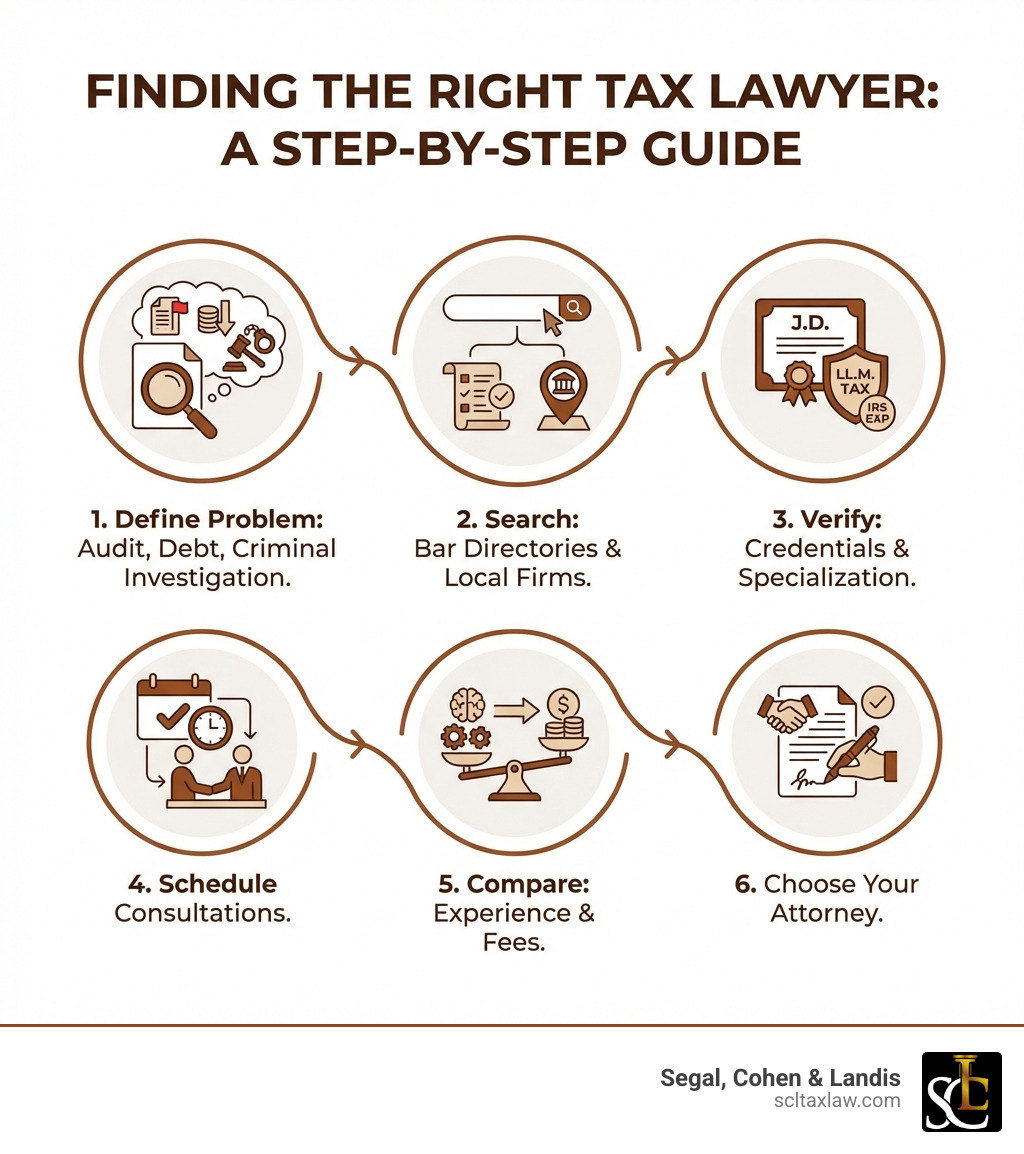
A Step-by-Step Guide to Finding Tax Lawyers Around Me
Finding the right tax lawyer can feel overwhelming, but a structured approach can simplify the process. Here’s our step-by-step guide to locating and choosing the best tax lawyers around me for your specific needs.
Step 1: Define Your Specific Tax Needs
Before you start your search, clearly identify the nature of your tax problem. This will help you narrow down your options and find a lawyer with the right expertise. Are you dealing with:
- Audit Defense: Are you facing an IRS or state tax audit? Do you need representation to challenge a tax adjustment proposal?
- Review the relevant notices, filing history, records, and deadlines before choosing a response. Evaluate professional assistance according to the facts, applicable law, and agreed scope of representation. Related resources: Tax Debt Relief Los Angeles.
- International Compliance: Do you have foreign assets or income and need help with FBAR, FATCA, or other international reporting requirements?
- Estate Planning: Are you looking to plan for wealth transfer, minimize estate taxes, or set up trusts?
- Business Tax Structuring: Is your business undergoing a merger, acquisition, or restructuring, and you need advice on tax implications?
- Criminal Tax Investigation: Have you been contacted by the IRS Criminal Investigation division?
Defining your needs allows us to connect you with a specialist who understands your unique situation.
Step 2: How to Search for “tax lawyers around me”
Once you know what you’re looking for, it’s time to start your search.
- Online Search Engines: A simple search for “tax lawyer near me” or “[Your City] tax attorney” can yield local results. For instance, searching for a Los Angeles Tax Attorney will bring up firms in that area.
- State Bar Association Website: Your state’s bar association maintains a directory of licensed attorneys. This is an excellent resource to verify credentials and ensure the lawyer is in good standing.
- Legal Directories: Reputable online legal directories allow you to search for attorneys by practice area and location, helping you find specialized firms in your area.
- Professional Referrals: Ask your CPA, financial advisor, or even other attorneys for recommendations. They often have networks of trusted legal professionals.
- Check Our Locations: Contact the firm to confirm meeting arrangements, the jurisdictions and matters it can handle, and the scope of any proposed engagement. Related resources: Local Tax Attorney Locations.
Step 3: Vetting and Choosing the Right Attorney for You
After compiling a list of potential tax lawyers around me, the next crucial step is to vet them thoroughly.
- Verify Credentials and Experience: As discussed earlier, confirm their J.D., state bar admission, and any specialized tax degrees (like an LL.M. in Taxation). Look for experience with the IRS or state tax agencies, as this provides invaluable insight.
- Read Client Reviews and Testimonials: Online reviews and testimonials can offer insights into a lawyer’s client service, communication style, and effectiveness. Positive feedback from past clients is a strong indicator of a lawyer’s expertise and successful outcomes.
- Schedule Initial Consultations: Most reputable tax law firms offer an initial consultation. This is your opportunity to:
- Explain your situation and hear their initial assessment.
- Ask about their experience with cases similar to yours.
- Inquire about their approach and strategy.
- Understand their fee structure (hourly rates, flat fees, retainers).
- Assess their communication style and whether you feel comfortable working with them.
- Ask Targeted Questions: Don’t be afraid to ask direct questions. For instance:
- “What is your success rate with cases like mine?”
- “What are the potential outcomes I should expect?”
- “How will you communicate with me throughout the process?”
- “What are the estimated timelines for my case?”
- Trust Your Gut: Your choice of tax attorney can mean the difference between a successful resolution and an outcome that will financially strain you, your family, and your business for many years. We believe in building a partnership based on mutual trust and open communication.
For those in Southern California, our Find Tax Attorney Los Angeles guide offers more specific advice.
Key Services and How a Tax Lawyer Can Help
Review the relevant notices, filing history, records, and deadlines before choosing a response. Evaluate professional assistance according to the facts, applicable law, and agreed scope of representation.
Handling Tax Disputes, Audits, and Litigation
Review the relevant notices, filing history, records, and deadlines before choosing a response. Evaluate professional assistance according to the facts, applicable law, and agreed scope of representation.
- IRS Audit Defense: From the moment you receive an audit notice, we can represent you, prepare your documentation, and handle all communications with the IRS or state auditors. Our IRS Audit Defense Lawyer services are designed to protect your rights and minimize your liability.
- Appeals: If you disagree with an audit outcome, we can guide you through the administrative appeals process with the IRS. Filing an appeal can often lead to a better settlement without the need for a full trial. Explore our insights on IRS Appeals.
- Tax Court Petitions and Federal Litigation: Contact Segal, Cohen & Landis to discuss the tax matter, relevant notices and deadlines, and available response options. Confirm the qualifications of the proposed representative and the scope of the engagement.
- Tax Debt Resolution: We help resolve various collection actions, including:
- Review the relevant notices, filing history, records, and deadlines before choosing a response. Evaluate professional assistance according to the facts, applicable law, and agreed scope of representation. Related resources: IRS Tax Levy.
- Wage Garnishment: We negotiate with the IRS to stop wage garnishments and establish manageable payment plans.
- Review the relevant notices, filing history, records, and deadlines before choosing a response. Evaluate professional assistance according to the facts, applicable law, and agreed scope of representation. Related resources: Tax Lien Resolution.
- Offers in Compromise (OIC) and Installment Agreements: We negotiate these agreements to help you settle your tax debt for a lower amount or pay it off over time.
- Criminal Tax Defense: If you’re facing allegations of tax fraud or evasion, our criminal tax defense attorneys can represent you from the initial investigation through trial, working to protect your freedom and financial future.
Navigating International Tax Issues
Review the relevant notices, filing history, records, and deadlines before choosing a response. Evaluate professional assistance according to the facts, applicable law, and agreed scope of representation.
- Review the relevant notices, filing history, records, and deadlines before choosing a response. Evaluate professional assistance according to the facts, applicable law, and agreed scope of representation. Related resources: Foreign Bank Account Reporting; 31 U.S.C. § 5321(a)(5).
- Review the relevant notices, filing history, records, and deadlines before choosing a response. Evaluate professional assistance according to the facts, applicable law, and agreed scope of representation. Related resources: Americans Living Abroad.
- Review the relevant notices, filing history, records, and deadlines before choosing a response. Evaluate professional assistance according to the facts, applicable law, and agreed scope of representation. Related resources: IRS Passport Revocation.
Assisting with Estate Planning and Inheritance Tax
Planning for the transfer of wealth is a critical aspect of financial management. Our tax lawyers assist with:
- Review the relevant notices, filing history, records, and deadlines before choosing a response. Evaluate professional assistance according to the facts, applicable law, and agreed scope of representation.
- Wealth Transfer Strategies: This includes setting up various trusts, structuring gifts, and advising on the most tax-efficient ways to pass on wealth to future generations.
- Review the relevant notices, filing history, records, and deadlines before choosing a response. Evaluate professional assistance according to the facts, applicable law, and agreed scope of representation.
- Real Estate Taxation: Discuss the tax issues affecting your real estate assets with a qualified adviser and confirm whether the proposed engagement covers the planning work you need. Related resources: Estate Planning Lawyer Boston.
Frequently Asked Questions about Hiring a Tax Lawyer
What are the costs associated with hiring a tax lawyer?
The costs of hiring a tax lawyer can vary significantly based on the complexity of your case, the attorney’s experience, and their fee structure. Generally, tax lawyers may charge:
- Hourly Rates: This is common for ongoing or unpredictable cases, where you pay for the actual time the lawyer spends on your matter.
- Flat Fees: For certain defined services, like preparing an Offer in Compromise or handling a specific type of audit, a flat fee might be quoted.
- Retainers: A lump sum paid upfront, from which hourly fees are deducted as work progresses.
- Consultation Fees: Some attorneys charge a fee for the initial consultation to discuss your case.
Review the relevant notices, filing history, records, and deadlines before choosing a response. Evaluate professional assistance according to the facts, applicable law, and agreed scope of representation. Related resources: Average Costs of Hiring a Tax Attorney in Los Angeles.
What is the difference between a tax lawyer and a CPA?
While both are tax professionals, their roles and legal authority differ significantly, which is a crucial distinction when facing a tax dispute.
- Tax Lawyers are licensed attorneys who provide legal advice, interpret tax law, and represent clients in court (including U.S. Tax Court). Critically, their communications are protected by attorney-client privilege, which is essential during audits or criminal investigations. They are necessary for legal disputes, tax litigation, and criminal tax defense.
- Certified Public Accountants (CPAs) are licensed accountants who focus on tax preparation, financial statements, and general tax advice. While they can represent clients before the IRS in administrative matters like audits, they cannot provide legal advice, represent clients in court, or offer the broad legal protection of attorney-client privilege, especially in criminal cases.
How do I find the best tax lawyer for my specific needs?
Finding the “best” tax lawyer is about finding the right fit for your specific situation. Here’s a checklist of questions to ask and factors to consider:
- Assess their specialization: Does their practice align with your needs (e.g., audit defense, international tax, business tax)?
- Check for relevant experience: Have they handled cases similar to yours? Do they have experience working for the IRS or state tax agencies?
- Read reviews and testimonials: What do past clients say about their professionalism, communication, and results?
- Ensure they are licensed: Verify their license with your state’s bar association.
- Schedule a consultation: Use this time to ask these key questions:
- What is your experience with cases like mine?
- What is your proposed strategy for my situation?
- What are the potential challenges and outcomes?
- How do you handle communication with clients?
- What is your fee structure, and what are the estimated costs?
- Do you have any conflicts of interest?
By thoroughly vetting potential candidates and asking the right questions, you can make an informed decision and find the best tax lawyers around me to represent your interests.
Conclusion
Navigating the complexities of tax law can be daunting, but you don’t have to face it alone. Whether you’re an individual struggling with an unexpected audit or a business wrestling with payroll tax issues, finding expert legal guidance is a critical step toward achieving peace of mind and a favorable resolution.
Adopting a proactive approach and seeking professional help early can often prevent minor issues from escalating into major problems. The right tax lawyer brings not only a deep understanding of the tax code but also the strategic insight and negotiation skills necessary to effectively advocate on your behalf.
Review the available options and applicable requirements for the particular matter. Outcomes depend on the facts and law; another taxpayer’s result does not predict yours. Confirm the scope of the proposed engagement.
Finding the right professional is the most critical step. We invite you to take that step today. Contact our tax law firm for a consultation and let us help you steer your tax challenges with confidence.
Have questions about this topic? Talk to an IRS attorney today.
Segal, Cohen & Landis, P.C. — Beverly Hills. Serving clients nationwide.

Samuel Landis, Esq.
LL.M. (Tax) · Selected to Super Lawyers®
Sam Landis is a Beverly Hills IRS tax attorney specializing in IRS collection defense, audit representation, and international tax compliance for foreign nationals and US expats.