

How to Get Tax Transcripts from the IRS (Quick Answer)
If you need to get tax transcripts from the IRS, here are the three fastest ways:
- Online — Sign in to your IRS Individual Online Account and download transcripts instantly as a PDF
- By phone — Call 800-908-9946 and use the automated service to request transcripts by mail
- By mail — Use the IRS Get Transcript by Mail option or submit Form 4506-T — allow 5 to 10 calendar days for delivery
All transcript types are completely free.
Tax records have a way of becoming urgent fast. Maybe a lender needs income verification before approving your mortgage. Maybe the IRS has sent a notice and you need to know exactly what they have on file. Or maybe you’re trying to sort out years of unfiled returns and you need a clear picture of your tax history.
Whatever the reason, knowing how to get tax transcripts from the IRS quickly — and understanding what each type of transcript actually shows — can save you serious time, stress, and money.
This guide walks you through everything: the five types of transcripts available, how to request them, how long they take, and what to do when things get complicated.
Review the relevant notices, filing history, records, and deadlines before choosing a response. Evaluate professional assistance according to the facts, applicable law, and agreed scope of representation.
What is an IRS Tax Transcript?
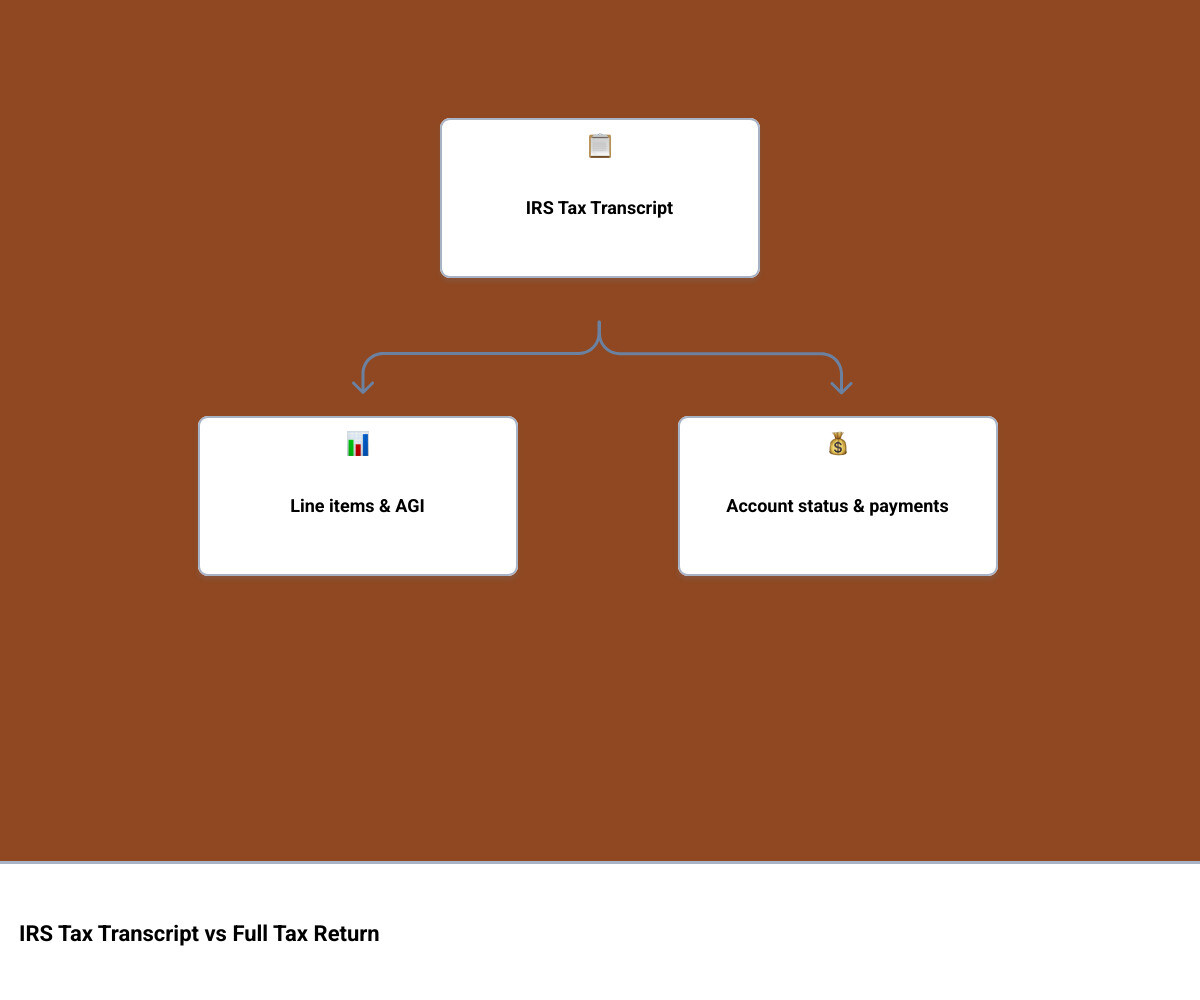
An IRS tax transcript is essentially a summary of your tax return data. While it might not look as “pretty” as the original Form 1040 you filed, it contains all the critical financial information the IRS has processed. Think of it as the “CliffsNotes” version of your tax history—it provides the line items, the math, and the official record of your account status without the 50 pages of instructions.
Most importantly, a transcript is an official document. It includes your Adjusted Gross Income (AGI), taxable income, and payment types. According to Topic no. 156, How to get a transcript or copy of your tax return, a transcript is often an acceptable substitute for an actual copy of a tax return for things like mortgage applications and student aid.
One thing to keep in mind: a transcript is not a photocopy. If you need an exact replica of the form you signed, including your actual signature and any physical attachments, you have to request a “copy” (using Form 4506), which involves a fee and a much longer wait time. For 99% of taxpayers, however, the free transcript is exactly what they need.
5 Types of IRS Tax Transcripts You Can Request
Not all transcripts are created equal. Depending on whether you’re applying for a loan, responding to an audit, or checking your income history, you’ll need a specific version. Here are the five types described in Transcript types for individuals and ways to order them:
- Tax Return Transcript: This shows most line items from your original return (Form 1040-series). It’s the “gold standard” for mortgage lenders. Note: It does not show any changes made after you filed (like an amendment).
- Tax Account Transcript: This focuses on the “life” of your tax return after it was filed. It shows your filing status, taxable income, and any adjustments the IRS made later. It also lists payments you made and any penalties or interest assessed.
- Record of Account Transcript: This is the “Combo Meal” of transcripts. It combines the Tax Return Transcript and the Tax Account Transcript into one comprehensive document. It’s incredibly useful if you need to see both what you filed and how the IRS changed it.
- Wage and Income Transcript: This shows data from the information returns the IRS receives about you—like W-2s, 1099s, and 1098s. If you lost your W-2 from three years ago, this is how you find that data. It is limited to approximately 85 income documents.
- Verification of Non-filing Letter: This is a formal statement from the IRS confirming they have no record of a processed return for the year you requested. It’s often required for student financial aid (FAFSA).
Transcript Comparison Table
| Transcript Type | Best For… | Availability (Online) | Availability (Automated Mail/Phone: return and account transcripts only) |
|---|---|---|---|
| Tax Return | Mortgages, Loans | Current + 3 prior years | Current + 3 prior years |
| Tax Account | Audits, Tax Debt | Current + 9 prior years | Current + 3 prior years |
| Record of Account | Full History | Current + 3 prior years | Not offered by automated mail/phone; use an available online route or Form 4506-T |
| Wage & Income | Unfiled Returns | Current + 9 prior years | Not offered by automated mail/phone; use an available online route or Form 4506-T |
| Non-filing Letter | FAFSA, Aid | Current + 3 prior years | Not offered by automated mail/phone; use an available online route or Form 4506-T |
How to Get Tax Transcripts IRS Online, by Mail, or Phone
The IRS has modernized significantly over the last few years. While you can still use the mail, the digital options are far superior in terms of speed. Regardless of the method you choose, the first step is to visit the official Get your tax records and transcripts page.

Step-by-Step Guide to Get Tax Transcripts IRS Online
An Individual Online Account is usually the fastest self-service way to view available tax transcripts. Access depends on identity verification and transcript availability. Eligible authorized tax professionals can also obtain transcripts through the Transcript Delivery System.
- Verify Your Identity: The IRS uses a service called ID.me to ensure you are who you say you are. You will need a photo ID (like a driver’s license or passport) and a smartphone to take a selfie.
- Log In: Once verified, log into your Individual Online Account.
- Select Your Transcript: You will be asked why you need the transcript (e.g., “Housing,” “Education,” “Federal Tax”). This helps the IRS suggest the right type.
- Download: Your transcript will appear as a PDF. You can save it to your computer or print it immediately.
This method gives you access to a much deeper history—up to 10 years for some transcript types. If you are dealing with complex IRS tax problems, having this immediate access is a lifesaver.
Alternative Methods to Get Tax Transcripts IRS by Mail or Phone
If you can’t (or don’t want to) use the online identity verification, you have two other official paths:
- By Phone: Call 800-908-9946. This is an automated service. You’ll need your SSN and the address used on your last return. The IRS will mail the transcript to that address within 5 to 10 calendar days.
- Form 4506-T requests available transcript products but no longer directs individual transcripts to third parties. Distinguish this from Form 4506 copies and separate authorized representative or IVES procedures.
For those facing an IRS exam, these documents are the foundation of your defense. You can learn more about how we use these in The Essential Guide to Federal Audit Transcript Retrieval and Defense.
Why You Might Need Your Tax Records
Review the relevant notices, filing history, records, and deadlines before choosing a response. Evaluate professional assistance according to the facts, applicable law, and agreed scope of representation.
- Mortgages and Home Loans: Lenders use Tax Return Transcripts to verify that the income you claimed on your application matches what you reported to the government.
- Financial Aid (FAFSA): Students and parents often need Verification of Non-filing letters or Tax Return Transcripts to qualify for grants and loans.
- IRS Audits: If the IRS is questioning your return, the first thing we do is pull your transcripts to see exactly what the IRS “thinks” happened. This is a core part of our IRS audit defense strategy.
- Resolving Back Taxes: If you haven’t filed in years, we use Wage and Income transcripts to see what employers reported so we can prepare accurate returns and help you handle unfiled tax returns properly.
- Identity Theft: Transcripts can help you spot fraudulent activity. If you see a return filed that you didn’t authorize, the transcript will show you the numbers used by the identity thief.
Processing Times, Costs, and Privacy Protections
One of the few “bargains” left at the IRS is the transcript service. All transcript types are free of charge.
Timing
- Online: Instant.
- Phone/Mail: 5 to 10 calendar days.
- Full Copy (Form 4506): Up to 75 days (and this one costs money).
Privacy
The IRS takes data security very seriously. To protect you from identity theft, transcripts now “mask” or hide partially identifiable information. For example, you might only see the last four digits of an SSN or the first few letters of a last name. However, all financial entries remain fully visible so you can still use the document for its intended purpose.
Fraud Detection
If you are worried about IRS tax problems, transcripts are your early warning system. They show transaction codes that indicate if a refund was issued, if a levy was placed, or if an audit was initiated.
Frequently Asked Questions about IRS Transcripts
How far back can I request my tax transcripts?
If you go online, you can generally get Tax Return transcripts for the current year and the three prior years. Tax Account and Wage and Income transcripts are often available for up to 10 years through your online account. If you need something older than 10 years, it may no longer be available in the IRS system.
Does ordering a transcript show when I will receive my refund?
No. This is a common myth. While transcripts show “transaction codes” that indicate a return was processed, they are not a reliable way to track your refund date. For that, you should use the “Where’s My Refund?” tool on the IRS website.
What is the difference in cost between a transcript and a full return copy?
Transcripts are $0. A full, certified copy of your tax return (Form 4506) currently costs $30 per tax year (as of May 2026). Unless you are in a legal battle where a certified signature is required, the free transcript is almost always sufficient.
Conclusion
Getting your tax transcripts shouldn’t be a source of anxiety. Whether you use the instant online portal or the automated phone line, the IRS provides these records for free to help you stay compliant and manage your financial life.
Transaction Code 922 relates to Automated Underreporter processing; it does not by itself establish a formal audit or a tax liability. Review associated codes and notices, and distinguish CP 2000 matching proposals from examinations.
Review the relevant notices, filing history, records, and deadlines before choosing a response. Evaluate professional assistance according to the facts, applicable law, and agreed scope of representation.
If you’ve pulled your transcripts and don’t like what you see, or if you need professional help retrieving records for an audit, contact a tax professional for assistance today. We’re here to provide the expert guidance you need to put your tax problems behind you for good.
Have questions about this topic? Talk to an IRS attorney today.
Segal, Cohen & Landis, P.C. — Beverly Hills. Serving clients nationwide.

Samuel Landis, Esq.
LL.M. (Tax) · Selected to Super Lawyers®
Sam Landis is a Beverly Hills IRS tax attorney specializing in IRS collection defense, audit representation, and international tax compliance for foreign nationals and US expats.