


צעדים מעשיים לצמצום החשיפה לקנסות IRS
הגשה ותשלום במועד ורישומים מדויקים מסייעים למנוע קנסות IRS. לכל קנס תנאים וכללי הקלה משלו; שום רשימת בדיקה אינה מבטיחה חסינות. התחילו בהרגלים הבאים:
צעדים בסיסיים למניעת קנסות IRS:
- הגישו במועד, גם אם אינכם יכולים לשלם הכול
- שלמו עד המועד האחרון; תוכנית תשלומים אינה עוצרת אוטומטית קנסות וריבית
- שלמו מקדמות נדרשות כאשר הניכוי במקור אינו מספיק
- בדקו את הניכוי במקור באמצעות כלי האומדן של ה-IRS
- שמרו רישומים טובים ובדקו שוב את דיוק הדוח
- בקשו ארכה אם דרוש זמן להגשה, אך שלמו עד מועד התשלום המקורי
מדריך זה מתמקד בכללים נפוצים למס הכנסה של יחידים. יתרת חוב אפס אינה פוטרת מכל איחור בדוח מידע או בדוח עסקי. הגשה ותשלום באיחור מחושבים בנפרד; קנס מקדמות תלוי בסכומי התשלום ובעיתוי, ולא רק ביתרה בעת ההגשה.
הקלות אפשריות כוללות סיבה סבירה והקלה מנהלית בקנסות. ההנחיות הנוכחיות מתארות מעבר מהקלה ראשונה (FTA) לפטור אוטומטי מקנס (AEP). בדקו אילו כללים חלים על הדוח והתקופה שלכם.
Segal, Cohen & Landis (SCL) מסייעת בסכסוכי מס פדרליים ומדינתיים. מדריך זה מסביר כיצד למנוע קנסות IRS ולבחון הודעה בלי להניח תוצאה מסוימת.
הבנת קנסות IRS נפוצים
הודעת קנס עשויה להלחיץ. זהו את הקנס, תקופת המס והבסיס המשפטי לפני שתחליטו לשלם, לחלוק על החישוב או לבקש הקלה.
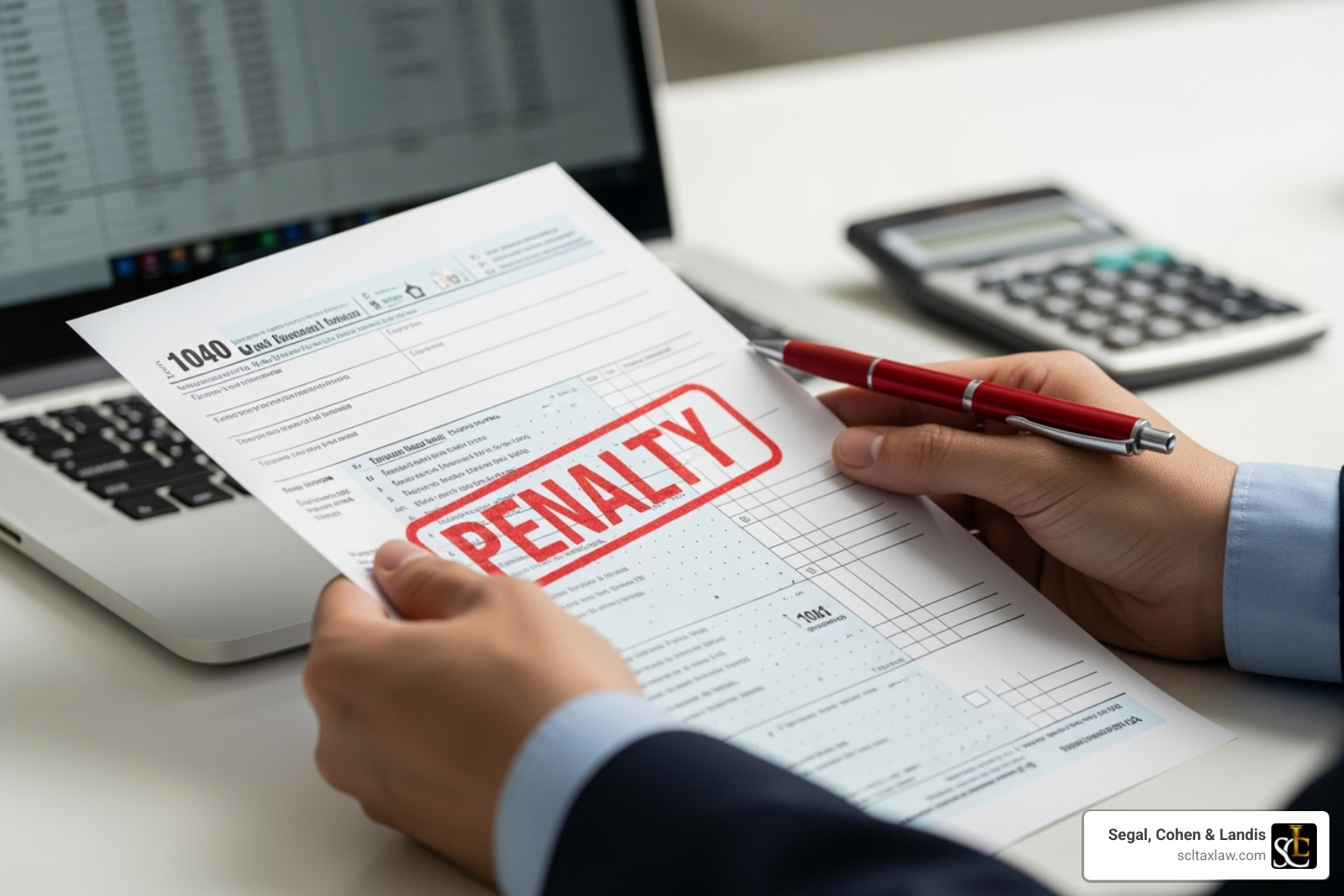
טעות אינה מפעילה אוטומטית כל קנס. הדין, העובדות והחריגים קובעים אם קנס חל.
סוגי קנסות נפוצים כוללים:
אי-הגשה: הגשה אחרי המועד החל, לרבות ארכה תקפה, עשויה לגרור קנס. החישוב תלוי בסוג הדוח.
אי-תשלום: מס שלא שולם עשוי לגרור קנס גם כשהדוח הוגש במועד. מועד התשלום והשיעור תלויים בנסיבות.
חסר במקדמות מס: חל על מי שאינו משלם די מס במהלך השנה בניכוי במקור או במקדמות. הדבר נפוץ אצל עצמאים, נותני שירותים ובעלי הכנסות מהשקעות.
קנס הקשור לדיוק: עשוי לחול על חלק מתשלום חסר הנובע מרשלנות, מהפחתה מהותית בדיווח המס או מעילה מוגדרת אחרת; לא כל טעות בתום לב מספיקה.
קנס בגין תשלום שלא כובד: המחאה שחזרה או תשלום אחר שנכשל עשויים לגרור קנס נפרד. בדקו את כללי התשלום וההקלות האפשריות.
אי-הגשה לעומת אי-תשלום
בדוחות מס הכנסה רגילים של יחידים, שיעור קנס ההגשה הכללי גבוה משיעור קנס התשלום הכללי. חריגים והקלות עשויים לשנות את התוצאה.
השיעור הרגיל בגין אי-הגשה הוא 5% מהמס שלא שולם לחודש או לחלק ממנו, בדרך כלל עד 25%. בדוח שמועדו חל ב-2024 והוגש באיחור של יותר מ-60 יום, המינימום היה הנמוך מבין $485 והמס שלא שולם; הסכום המוצמד משתנה בשנות מועד אחרות.
השיעור הרגיל בגין אי-תשלום הוא 0.5% לחודש או לחלק ממנו, עד 25%. הוא עשוי לרדת בתקופת תוכנית מאושרת לדוח יחיד זכאי שהוגש במועד, או לעלות לאחר תנאים מסוימים הנוגעים להודעת כוונה לעקל. בדקו את השיעור החל.
כאשר קנסות רגילים על הגשה ותשלום חופפים, קנס ההגשה מופחת בסכום קנס התשלום לאותו חודש. בשיעורים הרגילים, הסכום הכולל בתקופת החפיפה הוא 5% לחודש. קנס התשלום עשוי להימשך לאחר שרכיב ההגשה נעצר. יש לבדוק גם את כלל מינימום ההגשה המאוחרת.
הטבלה מסכמת את השיעורים הרגילים, ולא את כל החריגים:
| סוג קנס | שיעור | תקרה | כאשר שניהם חלים |
|---|---|---|---|
| אי-הגשה | בדרך כלל 5% לחודש או לחלק ממנו | 25% | מופחת בקנס התשלום בחודשים חופפים; כלל מינימום עשוי לחול |
| אי-תשלום | בדרך כלל 0.5% לחודש או לחלק ממנו | 25% | עשוי להימשך לאחר שקנס ההגשה נפסק; ייתכנו שיעורים מיוחדים |
גם אם אינכם יכולים לשלם הכול, הגישו דוח נדרש במועד. הגשה בזמן מטפלת בקנס ההגשה, ולא בכל קנס או חיוב ריבית אפשריים.
תשלום חסר וקנסות הקשורים לדיוק
קנס בגין חסר במקדמות עוסק בתשלומים נדרשים במהלך השנה. יתרה של $1,000 או יותר בעת ההגשה אינה קובעת לבדה שהקנס חל; יש לבחון כללי הגנה, זיכויים, ניכוי במקור, מועדי תשלום וחריגים.
קנסות מסוימים הקשורים לדיוק שווים ל20% מחלק התשלום החסר הרלוונטי. קטגוריות מוגדרות בדין עשויות לשאת 40%; אין זו העלאה לפי שיקול דעת רק משום שטעות נראית חמורה.
דוגמאות הן הפחתה מהותית בדיווח המס, רשלנות או התעלמות מכללים וטעויות הערכה חמורות. לכל אחת הגדרות משפטיות וטענות הגנה אפשריות; דיווח חסר של מס אינו זהה לדיווח חסר של הכנסה.
בדקו מספרים, שמרו תיעוד תומך ובקשו ייעוץ בעמדות לא ודאיות. סיוע מקצועי אינו מבטיח הקלה בקנס.
תכנון לצמצום סיכון לקנסות
בחנו חובות לפני הגעת המועדים. תהליך מעשי משלב יומן הגשות, תכנון תשלומים ורישומים התומכים בדוח.
שליטה במועדי הגשה ותשלום
בדוחות יחיד רבים לפי שנה קלנדרית, מועד ההגשה והתשלום הכללי הוא 15 באפריל, בהתאמה לסופי שבוע ולחגים שבדין. הקלות אסון, כללי שהייה בחו״ל וחריגים אחרים עשויים לשנות מועדים. כדי למנוע קנסות IRS, אמתו את המועד שלכם.
בקשו ארכת הגשה תקפה עד המועד החל באמצעות Form 4868 או דרך מותרת אחרת. בדוח יחיד רגיל לפי שנה קלנדרית, המועד המוארך הוא בדרך כלל 15 באוקטובר, בכפוף להתאמות לוח ולכללים מיוחדים.
ככלל, ארכת הגשה אינה ארכת תשלום. אמדו את החבות ושלמו עד מועד התשלום החל; אל תבלבלו ארכת הגשה עם דחיית תשלום מיוחדת.
אם תשלום מלא אינו אפשרי, הגישו בזמן ושלמו ככל שתוכלו. יתרה עשויה עדיין לשאת קנסות תשלום וריבית; פנו ל-IRS לבירור הסדרים זמינים.
הסכם תשלומים עם ה-IRS עשוי לאפשר תשלום חודשי לזכאים. התנאים תלויים בתיק, ואין להניח תקופת פירעון אחידה. הריבית בדרך כלל נמשכת, והטיפול בקנסות תלוי בכללי ההקלה ותוכנית התשלומים.
תכנון ניכוי במקור ומקדמות
מס הכנסה פדרלי משולם בדרך כלל לאורך השנה בניכוי במקור או במקדמות. בחנו סכום ועיתוי כדי למנוע קנסות IRS בגין חסר.
עובדים יכולים לבחון ניכוי במקור באמצעות Form W-4, במיוחד לאחר שינוי משמעותי בחיים או בהכנסה. כלי אומדן הניכוי של ה-IRS יכול לסייע באמידת התאמה; בדקו שהנחותיו מתאימות לכם.
הכנסה ללא ניכוי עשויה לחייב מקדמות, בהתאם לסכום ולחריגים. Form 1040-ES מסייע ליחידים לחשב תשלומים; ניכוי נוסף מהשכר יכול גם לכסות את החבות.
המועדים הרגילים ליחידים הם 15 באפריל, 15 ביוני, 15 בספטמבר ו-15 בינואר בשנה הבאה. סופי שבוע, חגים שבדין וכללים מיוחדים עשויים לשנות אותם. תקופות התשלום אינן רבעונים קלנדריים שווים.
כללי ההגנה למקדמות מס
כללי ההגנה הכלליים ליחידים יכולים לסייע למנוע קנסות IRS בגין חסר. הם אינם מבטלים את יתרת המס לתשלום בעת ההגשה.
ככלל, התשלום השנתי הנדרש הוא הנמוך מהסכומים הבאים, המשולם במקדמות בזמן ובניכוי במקור לפי הכללים החלים:
- 90% ממס השנה הנוכחית.
- 100% ממס השנה הקודמת, בדרך כלל בכפוף לדוח קודם המכסה 12 חודשים.
אצל בעלי הכנסה גבוהה, שיעור השנה הקודמת הופך בדרך כלל ל110% כאשר ה-AGI הקודם עולה על $150,000 ($75,000 לנשואים המגישים כעת בנפרד). כללים מיוחדים חלים על חקלאים, דייגים ומקרים מוגדרים נוספים.
החריג הכללי ליחידים חל כשהמס לאחר ניכוי במקור וזיכויים חלים נמוך מ$1,000. השתמשו בהוראות הטופס העדכניות לחישוב; אין להפחית מקדמות פשוט כאילו היו ניכוי במקור במבחן זה.
בהכנסה לא אחידה, שיטת תשלומים לפי הכנסה המחושבת בקצב שנתי עשויה להפחית תשלום נדרש. עיינו בForm 2210 ובהוראותיו לחישובים, פטורים ודרישות הגשה. תשלום בסוף השנה אינו בהכרח מבטל חסר קודם.
ודאו שפרטי התשלום נכונים ושיש כספים זמינים, התאימו נתוני דוח ועמדו בחובות דיווח מידע נפרדות. שמרו הוכחות הגשה ותשלום.
מה לעשות עם הודעת קנס
קראו את ההודעה בהקדם. שמרו אותה, את המעטפה ואת הרישומים התומכים וזהו את מועד התגובה.
ראשית, אמתו את ההודעה ואת עילת הקנס המצוינת. אם העובדות או החישוב נראים שגויים, פעלו לפי הוראות ההשגה במקום להניח שהקביעה נכונה.
כללי הריבית משתנים לפי הקנס. הפחתת קנס מביאה בדרך כלל להתאמת הריבית הקשורה, אך אינה מבטלת אוטומטית ריבית על מס שלא שולם. בדקו את החשבון והכללים החלים.
הקלות בקנסות והמעבר המנהלי
הקלה תלויה בקנס ובעובדות. לקנסות מקדמות כללי פטור נפרדים; הקלה רגילה מסיבה סבירה בדרך כלל אינה חלה עליהם.

FTA ו-AEP הן תוכניות הקלה מנהליות. נכון ל-2 באוקטובר 2026, הנחיות IRS מתארות AEP לדוחות מקוריים זכאים שנתיים של 2025 ורבעוניים של 2026 ואילך. FTA עדיין רלוונטית לתקופות או דוחות זכאים שלא נבחנו ל-AEP. AEP חלה אוטומטית בעיבוד; בדקו את מכתב ה-IRS. התוכניות עשויות למנוע או להסיר קנסות הגשה, תשלום או הפקדה מוגדרים, ולא את המס עצמו או את כל הריבית.
הזכאות בוחנת עמידה במועדים של אותו סוג דוח בשלוש השנים או 12 הרבעונים הקודמים, עם חריגים ודרישות עסקיות נוספות. בנפרד, סיבה סבירה עשויה לחול כשהופעלה זהירות רגילה אך הציות נותר בלתי אפשרי. הנסיבות הבאות דורשות ראיות לפי נסיבות התיק ואינן מקנות אישור אוטומטי:
- אסון טבע, כגון שרפה או שיטפון
- מחלה קשה או אי-יכולת לתפקד שלכם או של בן משפחה קרוב
- מות בן משפחה קרוב
- היעדרות בלתי נמנעת או אי-יכולת להשיג רישומים נדרשים
הסבירו כיצד הנסיבות מנעו ציות ומה עשיתם לאחר מכן. הציגו תיעוד רלוונטי. מחסור בכסף לבדו בדרך כלל אינו סיבה סבירה; מכלול העובדות וסוג הקנס חשובים.
בקשת הקלה ושמירת זכויות בדיקה
זהו את הליך ההקלה המתאים להודעה. אין להניח שבקשה משעה מועד אחר.
התקשרו ל-IRS במספר שבהודעה אמיתית כשהקלה טלפונית זמינה. מכתב המאשר AEP בדרך כלל אינו דורש תגובה; פנו ל-IRS אם הוטל קנס ואתם סבורים שעמדתם בתנאים.
הצהרה בכתב או Form 843 עשויים להתאים לבקשות מסוימות. פעלו לפי ההודעה וההוראות העדכניות; Form 843 אינו דרך אוניברסלית לתיקון כל סוגיית מס או קנס.
אם ההקלה נדחתה, בדקו הליך ערעור זמין ואת המועד המצוין. כללו עובדות ותיעוד נדרשים ובקשו ייעוץ במהירות אם מתקרב מועד הגשה אחר.
שירות הסיוע לנישומים עשוי לסייע לזכאים עם בעיות לא פתורות. Segal, Cohen & Landis יכולה לייעץ על טיפול בקנסות IRS ובסכסוכי מס, בהתאם לעובדות ולהיקף הייצוג.
שאלות נפוצות על מניעת קנסות IRS
התשובות מסכמות כללים כלליים; ההודעה והנסיבות בפועל עדיין חשובות.
מה חמור יותר: קנס אי-הגשה או אי-תשלום?
שיעור ההגשה הרגיל גבוה משיעור התשלום הרגיל. הטבלה מסבירה שיעורים חודשיים וחפיפה. מינימום, שיעורים מיוחדים והקלות עשויים לשנות את החישוב; הגשה בזמן אינה מסירה כל חיוב אחר.
האם אפשר לקבל פטור אם זו הטעות הראשונה?
ייתכן. FTA או AEP עשויות לחול לפי הכללים לעיל. טעות ראשונה לבדה אינה מוכיחה זכאות. בדקו סוג דוח, תקופה, היסטוריית ציות והתכתבות IRS לפני שתניחו שהתוכניות מסירות את הקנס שלכם.
אם איני יכול לשלם מס, האם עדיין להגיש דוח?
כן: הגישו דוח נדרש בזמן גם כשאי אפשר לשלם הכול. שלמו ככל שתוכלו, שמרו אישור ובחנו הסדר. הדבר מטפל בחובת ההגשה, אך אינו מבטיח הסרת קנסות תשלום או ריבית.
הכנת הצעדים הבאים
יומן הגשות, תוכנית תשלום מציאותית ורישומים אמינים מסייעים לצמצם חשיפה לקנסות. עם הגעת הודעה, בחנו את החישוב וכללי ההקלה החלים באמת.
הגיבו במועד, שמרו מסמכים תומכים ובקשו הבהרות כשצריך. אל תשליכו הודעה ואל תניחו ששתיקה פותרת את הבעיה.
Segal, Cohen & Landis מסייעת ללקוחות בסכסוכי מס. פנו לדיון בהודעה, במועדים ובייצוג אפשרי, בלי להניח תוצאה מובטחת.
הייעוץ צריך להתייחס לסוגיית המס הפדרלית או המדינתית שלכם ולראיות הזמינות. דונו בהיקף ובשכר הטרחה לפני התקשרות לייצוג.
בהתאם לזכאות ולנסיבות, אפשרויות עשויות לכלול הסדר תשלומים, הקלת קנס או הצעת פשרה. קבלת הסדר מופחת אינה אוטומטית.
כדי לטפל בקנסות IRS, התחילו בהודעה בפועל, בכללים העדכניים ובתוכנית תגובה מתועדת.
שירותים קשורים
מאמרים קשורים
ייצוג בהובלת עורכי דין
מוכנים לפתור את הבעיה שלכם מול ה-IRS?
קבעו ייעוץ חסוי עם עורך דין למסים. ללא לחץ מכירתי, רק ייעוץ משפטי כן ודרך ברורה קדימה.
ייעוץ ראשוני ללא עלות