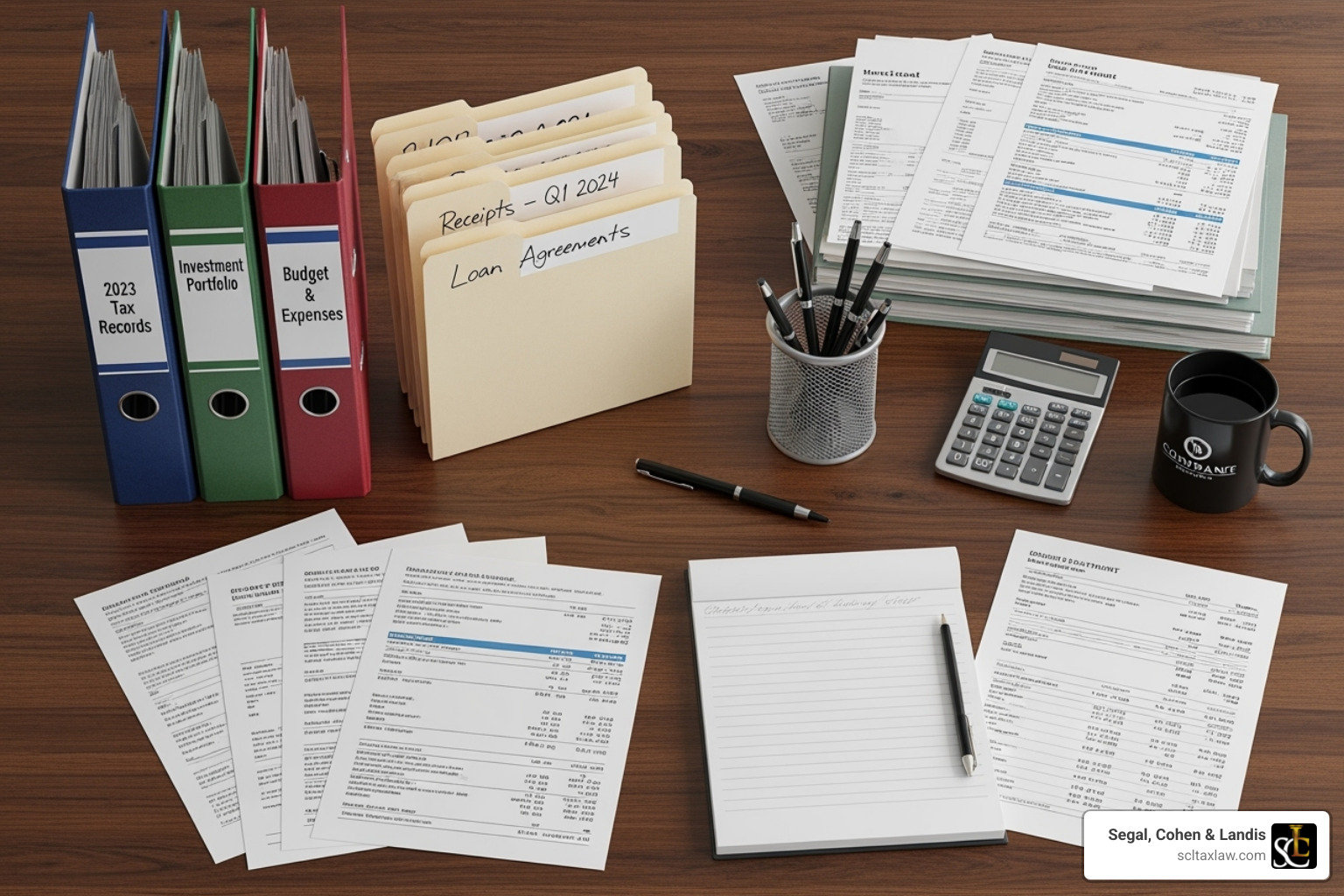


这是一扇您可以提前准备好应对的门
企业税务审计——这三个词可能立即触发任何企业主的压力。虽然担忧和沮丧是对审计通知的常见反应,但重要的是要知道被审计并不一定意味着您做错了什么。
企业税务审计只是 IRS(或州税务机关)对您的纳税申报表进行审查,以核实其准确性和对税法的合规性。IRS 使用风险评估系统选择申报表,考虑异常扣除项或行业比较等因素。虽然只有少数企业被审计,但若您被选中,充分准备是关键。
大多数审计在12个月内完成,结果在很大程度上取决于您的记录和配合程度。该过程可能令人不知所措,但凭借正确的知识和专业指导,您可以成功应对,甚至强化您的商业实践。
关于本文作者
我是 Segal, Cohen & Landis 的管理合伙人、律师 Samuel Landis。凭借超过33年解决复杂 IRS 争议(包括 business 税务审计辩护)的经验,我已开发出经过验证的策略,帮助企业取得有利结果。作为曾任税法兼职教授并拥有税法硕士学位的我,将自信地引导您完成整个过程。

您的企业为何可能被审计:了解选择流程
是否曾好奇为何有些企业被审计而其他企业不会?IRS 并非随机抽签。它使用系统化、数据驱动的方法选择申报表进行审查。
IRS 如何选择审计哪些申报表
IRS 依靠复杂的筛选系统标记可能存在错误的申报表。其核心是 差异函数系统(DIF),这是一个根据出错可能性为您的申报表评分的计算机程序。高分申报表由 IRS 代理人审查,然后决定是否需要审计。
另一个关键方法是 行业比较。IRS 掌握您所在行业企业典型利润率、费用比率和扣除模式的数据。若您的数字与这些规范显著偏离,可能触发审查。例如,若大多数餐厅将食品成本报告为收入的30%,而您的为50%,IRS 可能会想了解原因。 随机选择也会发生,但很少见;大多数审计是由基于风险的因素触发的。
常见的红旗信号和审计触发因素
即使您合规,某些项目也可能引起 IRS 的注意。了解这些触发因素有助于您准备文件。
- 大额或异常扣除项:与您的收入或行业平均水平不相称的扣除项是主要红旗信号。始终申报合法的扣除项,但确保您有充分的文件支持。
- 持续的业务亏损: Claiming losses for several consecutive years can signal to the IRS that your venture might be a hobby, not a business. Be prepared to demonstrate your profit motive.
- High vehicle expenses: The IRS heavily scrutinizes vehicle write-offs, especially claims of 100% business use. Detailed, contemporaneous mileage logs are essential.
- Cash-intensive businesses: Operations like restaurants, salons, and car washes face heightened scrutiny because cash income is harder to trace. The IRS may perform a lifestyle analysis to see if your personal spending aligns with your reported income.
- Cryptocurrency transactions: The IRS is actively focusing on digital assets. Accurate reporting of all crypto holdings and income is critical.
- Mismatching income reports: The IRS automatically matches 1099-NEC and 1099-K forms against your reported income. Any discrepancy is an easy flag for an 审计.
- Other triggers: Intermingling business and personal funds, failing to report tips, and claiming unreasonable home office 扣除项 can also lead to an 审计.
Understanding these red flags isn’t about paranoia—it’s about being prepared. Good documentation and honest reporting are your best defenses. For more insights, see our guide on Are You at Risk of an IRS Audit and How Far Back Can the IRS Go?
The bottom line is that most business 税务审计 selections are based on data patterns. Knowing what triggers an 审计 allows you to minimize your risk while claiming every legitimate 扣除项.
The IRS Business Tax Audit Process: A Step-by-Step Guide
Navigating a business 税务审计 is manageable when you understand the process. Here’s what to expect at each stage.
Receiving the Audit Notice: Your First Steps
The IRS always initiates a business 税务审计 by mail—never by email, text, or a surprise phone call. When the letter arrives, resist the urge to call the 审计or immediately. Instead:
- Stay calm and read the notice carefully to understand what tax years and items are being examined.
- Inform key personnel, like your CFO or bookkeeper, but keep the circle small to avoid unnecessary anxiety.
- Designate a single point of contact for all IRS communications. Ideally, this should be a tax professional.
- Gather relevant documents for the years and items in question. Good organization from the start is crucial.
The Three Types of Audits
Audits vary in intensity. The IRS provides its own guidance on IRS 审计.
- 书信审计: The simplest type, conducted entirely by mail. You send requested documents to the IRS for review. These are for straightforward issues.
- 办公室审计: You bring specific records to a local IRS office to meet with an examiner. These are for more complex issues than a correspondence 审计 but are still limited in scope.
- 现场审计: The most comprehensive type. An IRS agent visits your business or representative’s office for an in-depth review of extensive records. Professional representation is essential for a field 审计.
The Examination: What the Auditor Reviews
During the examination, the 审计or verifies that your 纳税申报表 matches your financial reality. They will review:
- Books and Records: Your general ledger, journals, and internal accounting documents.
- Bank Statements: Both business and sometimes personal statements to trace income and verify expenses.
- Invoices and Receipts: The paper trail that substantiates your income and 扣除项.
- Payroll Records: Forms 941, W-2s, and 1099s. Auditors pay close attention to worker classification (employee vs. contractor). For more on this, see our article on Resolving Payroll Tax Issues: Expert Advice for Small Business Owners (英语).
- Sales Records: Invoices, cash register tapes, and POS data to verify gross receipts.
Auditors can also access third-party information from banks, customers, and suppliers to complete their examination.
Concluding the Audit: Possible Outcomes
After the review, there are several possible outcomes:
- No-Change Report: The best outcome. The 审计or finds no issues, and no adjustments are needed.
- Refund: In rare cases, the 审计 reveals you overpaid your taxes.
- Agreement with Proposed Changes: If the 审计or finds you owe more tax and you agree, you’ll sign an agreement form and receive a bill for the tax, plus 罚款 and interest.
If additional tax is owed, expect 罚款 and interest. An accuracy-related 罚款 is typically 20% of the underpayment, but it can jump to 75% in cases of civil fraud. Interest accrues from the original due date of the return.
Disagreeing with the Findings: Your Right to Appeal
You have the right to challenge an 审计or’s findings. An 审计 is a proposal, not a final judgment.
- Discuss concerns with the 审计or: Start by explaining your position and providing any additional documentation. Many issues are resolved here.
- Meet with the 审计or’s manager: A fresh perspective can help break an impasse.
- File a formal appeal: If you still disagree, you can file a written protest with the independent IRS Office of Appeals. An appeals officer will review the case and has the authority to settle it based on the hazards of litigation.
Even while appealing, interest continues to accrue on the disputed amount. For a comprehensive guide, read our article: What to Do When You Disagree with an IRS Audit (英语).
Your Rights And Responsibilities During An Audit

When facing a business 税务审计, it’s crucial to understand that you have both enforceable rights and clear responsibilities. Balancing both puts you in a much stronger position.
Understanding Your Taxpayer Rights
The Taxpayer Bill of Rights provides 10 fundamental protections. Key rights during an 审计 include:
- The Right to Be Informed: The IRS must explain what they need and why.
- The Right to Quality Service: You are entitled to professional and courteous treatment.
- The Right to Professional Representation: You can hire a 税务律师, CPA, or 注册税务师 to represent you. You do not have to speak directly with the 审计or.
- The Right to Privacy and Confidentiality: The IRS must protect your sensitive financial information.
- The Right to Challenge the IRS’s Position and Be Heard: You can disagree with an 审计or’s findings and appeal their decision through an independent forum.
- The Right to Pay No More Than the Correct Amount of Tax: You are not obligated to accept incorrect assessments.
Exercising these rights is not confrontational; it ensures you receive the fair treatment you’re entitled to under the law.
Fulfilling Your Responsibilities in a Business Tax Audit
Your cooperation and preparedness are critical to a smooth 审计 process. Your key responsibilities include:
- Keeping Adequate Records: You are legally required to maintain clear, organized, and complete financial records to substantiate all income and 扣除项. Without documentation, a legitimate expense may be disallowed.
- Adhering to the Record Retention Period: The standard guideline is three years, but we strongly recommend keeping records for at least six years. The IRS can look back six years for substantial income understatements and has no time limit in cases of suspected fraud.
- Providing Requested Documents Promptly: Respond to IRS requests on time, but only provide what has been specifically requested for the tax years under review. Do not volunteer extra information.
- Cooperating and Being Honest: Answer the 审计or’s questions completely and honestly. If you don’t understand a question, ask for clarification rather than guessing.
The ultimate responsibility for your records and the accuracy of your return lies with you, even if you hire a professional. For specific guidance on employer obligations, our article on Payroll Tax Problems: Understanding Your Liability and the Need for Tax Attorneys (英语) offers essential insights.
Minimizing Future Audit Risk And Knowing When To Get Help
No one wants to repeat a business 税务审计. Fortunately, you can take concrete steps to reduce your chances of future scrutiny and strengthen your financial practices.
- Maintain excellent records: This is your most important defense. Use accounting software, save digital copies of receipts, and reconcile your books monthly. For vehicle expenses, keep a detailed, contemporaneous mileage log.
- Separate business and personal finances: Open a dedicated business bank account and credit card. This eliminates a major red flag and simplifies expense tracking.
- File accurately and on time: Always file on time, and double-check that your reported income matches all 1099s and W-2s. Report all income, including cash and crypto.
- Understand your 扣除项: Only claim expenses that are ordinary and necessary for your business, and have documentation for every one. If you claim losses year after year, be ready to prove your business has a path to profitability.
- Get a professional review: Have a qualified tax professional review your returns before 申报. Prevention is always cheaper than a cure.
When to Hire a Professional
While you can handle a simple correspondence 审计 on your own, many situations require expert help. Consider hiring a tax professional if:
- The tax situation is complex: Your business involves intricate transactions, international dealings, or complicated 扣除项.
- Large sums of money are at stake: If the potential tax liability, 罚款, and interest are significant, professional representation is a wise investment.
- There’s potential for 罚款 or criminal charges: If the 审计 hints at fraud or other serious issues, hire a 税务律师 immediately. They can provide legal protections that other professionals cannot.
- You need a single point of contact: A representative can handle all IRS communications, shielding you from direct interaction with 审计ors and reducing your stress.
- You disagree with the 审计 findings: A professional can advocate for your position and guide you through the appeals process effectively.
At Segal, Cohen & Landis, we provide comprehensive IRS Audit Representation to protect your interests. For businesses in the Los Angeles area, our guide on Business Tax Attorneys in Los Angeles: Key Insights offers valuable perspective.
关于企业税务审计的常见问题
After decades of helping business owners steer 审计, we’ve found that certain questions come up repeatedly. Here are clear, honest answers to the most common ones.
How far back can the IRS 审计 my business?
The look-back period, or 诉讼时效, depends on the situation:
- Standard 3-Year Rule: In most cases, the IRS can 审计 returns filed within the last three years.
- Extended 6-Year Rule: If you’ve substantially understated your gross income (by more than 25%), the IRS can go back six years.
- No Limit: If the IRS suspects fraud or if you never filed a return, there is no 诉讼时效. They can 审计 you indefinitely.
Because of these rules, we recommend keeping meticulous records for at least six years. For a deeper dive, see our article on Are You at Risk of an IRS Audit and How Far Back Can the IRS Go?
How long does a business 审计 usually take?
The timeline for a business 税务审计 varies widely:
- Correspondence Audits (by mail) are the quickest and may wrap up in a few months.
- Office Audits (at an IRS office) typically take several months.
- Field Audits (at your business) are the most comprehensive and can easily last six months to a year or more.
Factors that influence the timeline include the complexity of your business, the quality of your records (disorganization is the number one cause of delays), and your level of cooperation. Most 审计 are completed within 12 months.
What are the consequences of an unsuccessful 审计?
An “unsuccessful” 审计 means the IRS has determined you owe more tax. The consequences can be significant and typically include:
- Additional Taxes Owed: You will receive a bill for the underpaid amount.
- Substantial Penalties: The most common is an accuracy-related 罚款 of 20% of the underpayment. In cases of fraud, this can jump to 75%.
- Accrued Interest: Interest is charged on the underpayment from the original due date of the return and compounds daily.
- Liens and Levies: If you don’t pay, the IRS can place a federal 税务留置权 on your property (damaging your credit) or issue a levy to seize assets like bank accounts or garnish wages.
- Increased Future Scrutiny: A past 审计 with significant adjustments can make you more likely to be 审计ed again.
If you’re facing these issues after an 审计, our team can help you explore solutions. Visit our IRS Tax Problems (英语) page to learn how we can help.
Conclusion: Turning An Audit Into An Opportunity For Strength
A business 税务审计 is a serious challenge, but it doesn’t have to be a disaster. With the right preparation and support, it can become a catalyst for strengthening your business’s financial health.
As we’ve covered, the businesses that steer 审计 most successfully are those that maintain meticulous records, handle communications professionally, and understand their rights. An 审计 forces you to examine your financial practices, and many businesses emerge with better systems and controls in place, making them more resilient for the future.
You have the right to professional representation, and you don’t have to face the IRS alone. Designating an experienced 税务律师 as your point of contact ensures consistent messaging and allows you to focus on running your business.
At Segal, Cohen & Landis, we have guided businesses through business 税务审计 for over 33 years, serving more than 25,000 satisfied clients. Our team knows 税法 and how to apply it strategically to protect your interests and achieve the best possible outcome.
Whether you’re facing an 审计 or want to strengthen your 合规 practices, we’re here to help. Don’t steer the complexities of an IRS examination alone. Develop your IRS 审计 defense strategy with an experienced payroll 税务律师 (英语) from our firm who understands what you’re up against.
Your business deserves expert representation. Let’s work together to turn this challenge into an opportunity for lasting financial strength.